Good morning and welcome to FirstFT. In today’s newsletter:
-
Andy Burnham takes over from Sir Keir Starmer as UK prime minister
-
Oil trades above $90 a barrel for the first time since mid-June
-
Morgan Stanley emerges as top bank for AI debt deals
-
Will a tight-lipped Fed chair fuel market volatility?
You can listen to today’s top news stories in the FT News Briefing podcast.
Andy Burnham officially takes over from Sir Keir Starmer today, becoming the UK’s seventh prime minister in a decade.
Transition of power: Starmer will give a brief resignation speech in Downing Street this morning before heading to Buckingham Palace to tender his resignation to King Charles.
Burnham, who is also known as the king of the north, will then travel to the palace at around noon to formally accept the invitation from the monarch to form a government, before arriving in Downing Street to give his first speech to the nation as prime minister.
Policy blitz: The new prime minister is expected to unveil a blitz of policy announcements on issues ranging from devolution to social care and the water industry, as well as outline plans for a more beefed-up Number 10.
The former mayor of Greater Manchester is also expected to unveil the top positions in his new cabinet today, including Rachel Reeves’ successor as chancellor, who is expected to be the current home secretary Shabana Mahmood.
In his first Downing Street address, Burnham will set out his “priorities for restoring confidence in government”, his spokesperson said.
The first 100 days: Political scientists said the initial three months would be an important window in which Burnham, who takes office without winning a general election and after securing the Labour leadership unopposed, either generates precious momentum or is forced on to the defensive.
Burnham will face immediate pressure from the government bond market in his first days in office. The gilt market has been especially vulnerable to the Iran war, in part due to the UK’s energy supply and elevated inflation running into the conflict. Our live blog has more.
Here’s what else I’m keeping tabs on today:
-
Mexican cartel boss sentenced: Ismael “El Mayo” Zambada, who co-founded the Sinaloa Cartel in the late 1980s with Joaquin “El Chapo” Guzmán, is due to be sentenced to life in prison later today. Read more on 76-year-old Zambada.
-
Economic data: June consumer price index inflation rate data is released in Canada, while Argentina’s statistics agency publishes June trade balance data.
-
Companies: Domino’s Pizza releases second-quarter results.
Five more top stories
1. Oil prices rose above $90 a barrel for the first time in more than a month following a fresh wave of US attacks on Iran after at least three American troops were killed. Prices for Brent crude gained 2.5 per cent to $90.30 a barrel — the highest price since June 11. Here’s the latest.
2. Morgan Stanley has emerged as Wall Street’s chief architect of the financing structures underpinning the AI boom. According to industry executives, the bank has become the dominant adviser putting together the biggest and most inventive AI infrastructure financings since last year.
3. Lockheed Martin plans to field a new, lower-cost model of the Patriot missile that can be deployed to battlefields at speed. The US defence group announced plans for the PAC-3 Adapted Capability Effector missile on the first day of the Farnborough Airshow.
4. China’s “national team” of funds has bought close to $9bn in equities as Beijing seeks to support the stock market following a bruising sell-off on Friday. China’s benchmark CSI 300 rose 1.5 per cent and Hong Kong’s Hang Seng index jumped 2.3 per cent today while other regional indices, including Japan’s Nikkei 225 and South Korea’s Kospi, fell.
5. Thousands of supporters of the youth-led “Cockroach” movement defied police blockades and poured into central Delhi today. Postgraduate student Abhijeet Dipke began the Cockroach Janta Party while studying in the US as a satirical online campaign, but it has morphed into a national protest movement.
The Fed’s new tight-lipped communication strategy

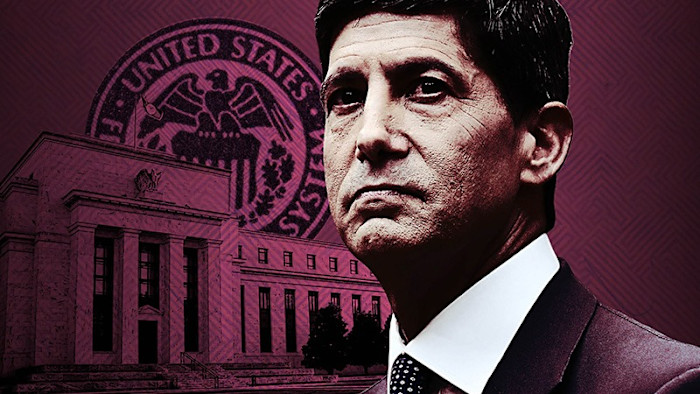
After more than a decade in which the world’s most important central bank has taken great pains to telegraph its next moves — for fear of market-shaking surprises — a new, more tight-lipped era has arrived.
Little more than 20 minutes into his first public appearance as Fed chair in June, Kevin Warsh set out his intention to be “very curt” in response to questions about his plans for one of the world’s most important economic levers — US interest rates.
The question is whether Warsh’s taciturn approach to public policy will soothe volatility in the bond market or stoke it.
We’re also reading . . .
Chart of the day
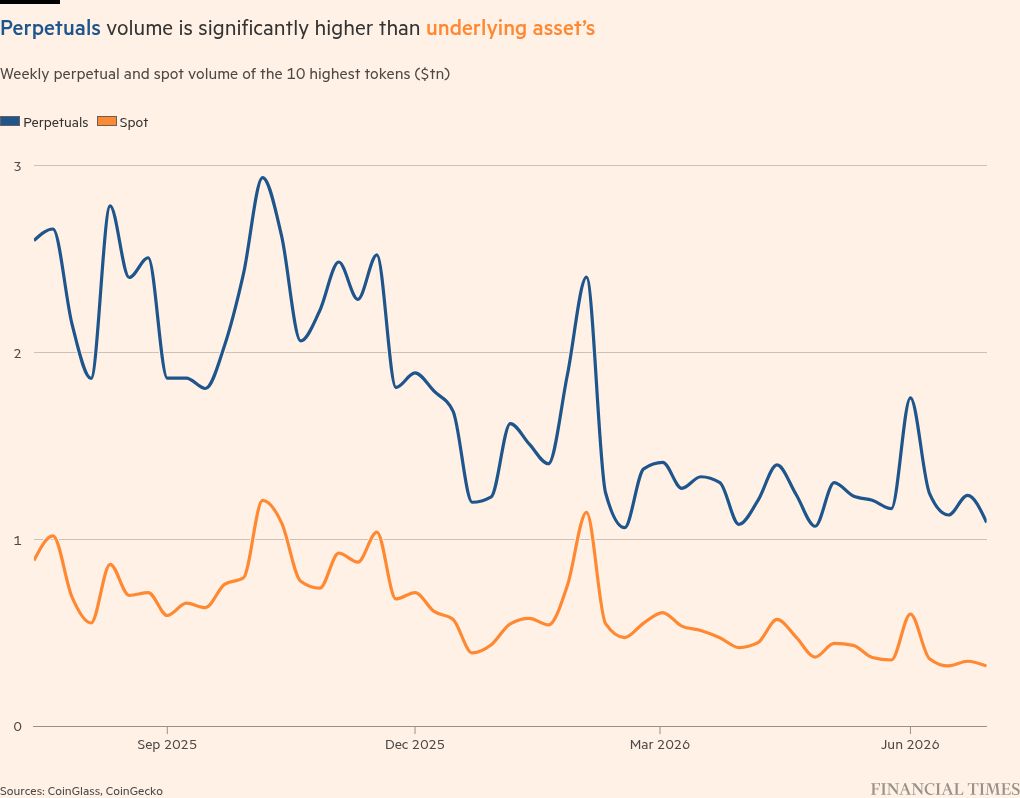
Retail traders are piling into so-called perpetual futures that were only cleared to trade in the US in May despite consumer advocates branding them “the most dangerous product in crypto”. The highly leveraged derivatives trade all day every day of the year and allow big bets with only a small cash stake.
Take a break from the news . . .
In politics and business many old leaders stay on even when impairment strikes. But a few have mastered the art of knowing when to step down, writes Pilita Clark.