Unlock the Editor’s Digest for free
Roula Khalaf, Editor of the FT, selects her favourite stories in this weekly newsletter.
It’s coming, whether we’re ready or not. Scientific opinion is solidifying that this latest episode of the El Niño weather pattern will be the strongest in living memory.
With the El Niño already upon us and set to peak towards the end of the year, aggravating factors have worsened in just a few weeks. Food prices, previously gratifyingly quiescent despite the oil and fertiliser shortages from the Iran war, have been rising sharply since mid-August, with Russian attacks on Ukrainian shipping and vice versa severely choking grain shipments in the Black Sea. Droughts in the northern hemisphere have emphasised how climate change creates and amplifies shocks.
So how well prepared is the world, and specifically its food systems, for a monster El Niño? Droughts, floods and storms will cause severe damage at local levels, but wider devastation can be limited as long as governments allow international markets in food to function and only intervene when necessary.
It is not the ferocity of a weather system that kills people but the lack of preparation for it. The destruction and subsequent famines that followed the infamous El Niño of 1877-78 killed 50mn people out of a global population of around 1.4bn at the time. More than a century of agricultural productivity and state capacity building later, the 1997-98 episode, probably the most severe in the 20th century, killed only an estimated 22,000 people through droughts and floods, less than 0.001 per cent of the global population at the time.
One lesson from recent episodes is the importance of international trade. The protectionist impulse towards self-sufficiency in food, generally a bad idea, is particularly unwise during an El Niño episode. El Niños are typically asymmetric: droughts in one place, floods in another; poor harvests in one country, increased crop yields elsewhere. Trade can balance production and consumption across nations.
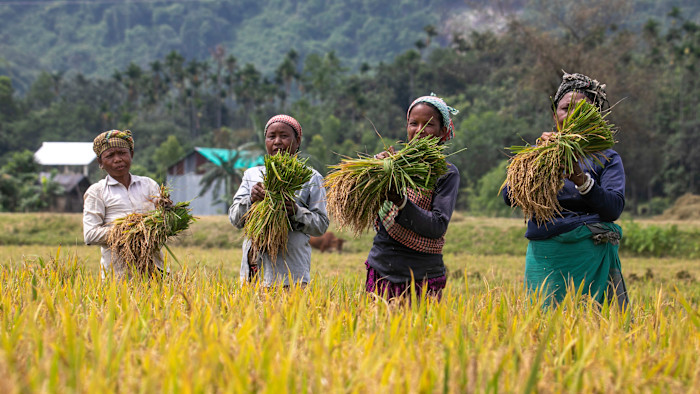
The 1997-98 El Niño disrupted farming across Asia, particularly rice cultivation — spectacularly bad timing given a financial crisis was ravaging much of the continent. Rice production in densely populated Bangladesh dropped by 20 per cent.
But while floods and a subsequent famine in the 1970s killed about 1.5mn people in the country, the death toll in 1997-98 turned out to be far smaller.
In the 1970s, Bangladesh lacked the ability to import rapidly at scale, and the US withheld grain shipments because of its links with communist Cuba. But in the late 1990s, having liberalised food trade, Bangladeshi traders imported rice from India, thereby stabilising prices and averting famine.
In a paper on the episode, Paul Dorosh at the International Food Policy Research Institute in Washington argued that while long-term domestic agricultural productivity was important, trade could play a critical role during emergencies. Subsequent research found the same in sub-Saharan Africa, with the most important factor in mitigating crises being the size of imports rather than the proximity of trading partners.
Such asymmetry is likely to be repeated this time round. Food production in Central America and northern Brazil will very probably suffer from droughts, but higher maize and soya production due to more rainfall in southern Brazil and Argentina is likely to weigh against it.
Governments should generally get out of the way and let international food markets function, but they have a vital role in crisis preparation and response.
The UN’s World Food Programme and Food and Agriculture Organization have launched an appeal for preventive measures ahead of the arrival of El Niño. It’s striking how precisely targeted their plans are, with a focus on just 8.8mn particularly vulnerable people in 22 countries and a modest budget of $202mn. Countries are also preparing their own targeted responses. Brazil, for example, has hired 4,600 personnel to combat wildfires.
In a 2021 report, the UNFCCC noted that while the number of recorded climate disasters had increased fivefold over the past 50 years, thanks to early-warning systems, the total number of deaths from them had dropped by roughly two-thirds. The extraordinary episode in Nepal this past week, where a school of 900 pupils was saved from drowning due to phone calls made to the headteacher a few minutes ahead of the flood, shows the immense power of good information at the right time.
El Niño isn’t an unstoppable apocalypse. It’s a stress test of a global trade network and an increasingly sophisticated crisis response system. El Niño is coming, but it’s a threat humanity can manage rather than a fate to which it must resign itself.