It’s been a nearly quarter century since 9/11, but the magnitude is still fresh on the minds of those who were right there.
“I turned to my colleague and said, ‘This is a terrorist incident. We’re in this,'” recalls Chris Browne, who was the manager of Washington Reagan National Airport at the time.
Browne, now the director of the National Air and Space Museum and a former naval pilot, says he knew immediately that it was a terrorist incident. By the time the world was watching live on TV, a second plane was headed for the World Trade Center.
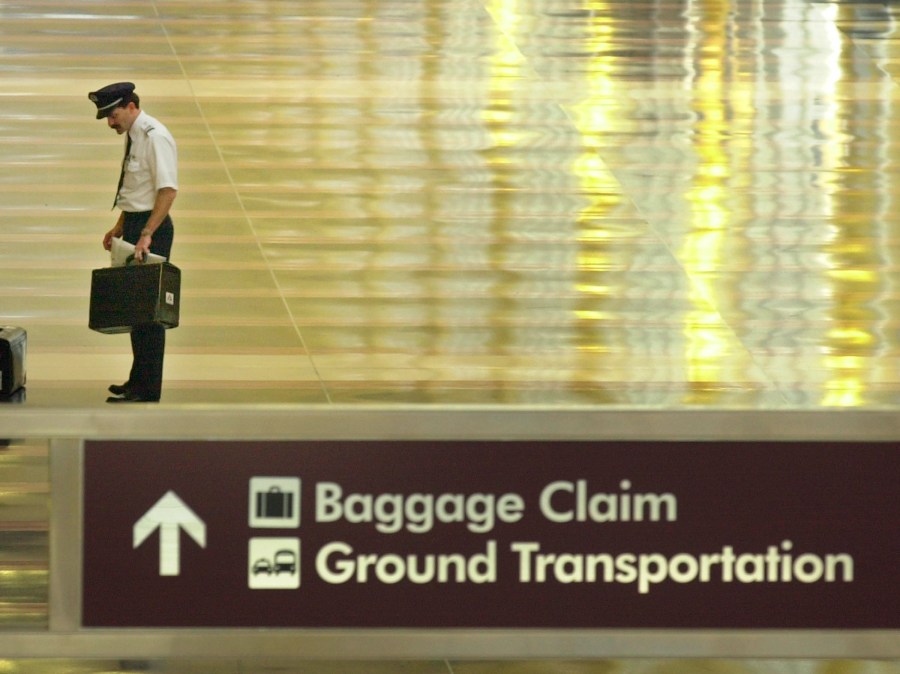
Browne, deep in decision-making at DCA, chose to look away at what was happening in New York City.
“I almost turned it off. Not that it wasn’t hugely relevant, but I didn’t want folks to get distracted from what we were dealing with,” he said.
Then, an American Airlines flight that had departed from Dulles International Airport slammed into the Pentagon. The attack killed 184 people, including everyone aboard the plane and 125 people inside the Pentagon, less than three miles away from DCA.
“Yeah, it was close,” Browne said. “We had burning embers coming out of the smoke plume landing on the airport.”
Browne and his team made the decision to send a specialized fire truck, built to put out airplane fires, from DCA to the Pentagon. It became an instantly recognizable part of the battle to save lives that morning.
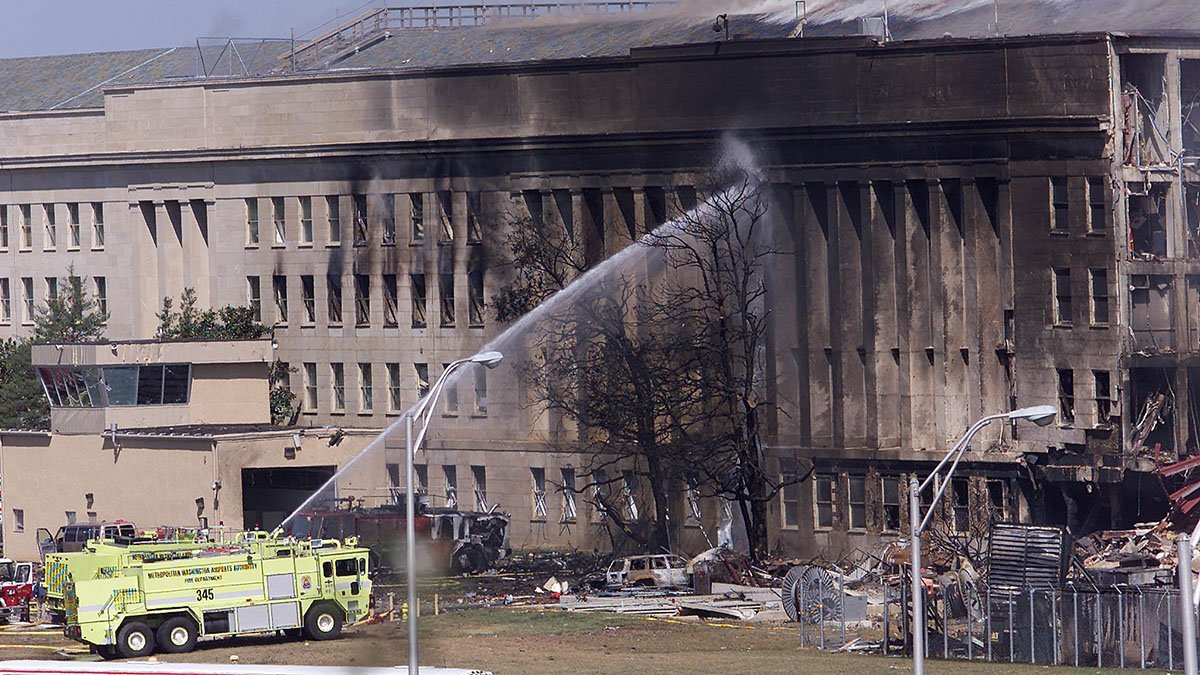
Photo: Stephen Jaffe / AFP via Getty Images
Photo: Stephen Jaffe / AFP via Getty Images A Metropolitan Washington Airports Authority fire truck joins in the firefighting efforts at the Pentagon after Flight 77 from Dulles was hijacked and intentionally crashed into it on Sept. 11, 2001.
‘The airport became empty’: Reagan National ordered closed for weeks after 9/11
As time ticked by, hundreds of planes were grounded across the U.S., and a new reality set in. Reagan National was ordered to close because it was deemed too much of a security risk since it’s so close to D.C.
“That was an emotional time,” Browne said. “Because we really thought, ‘What is the relevance of this airport if we are starting to lock out the visitors and the users that were, just days prior, using this?'”
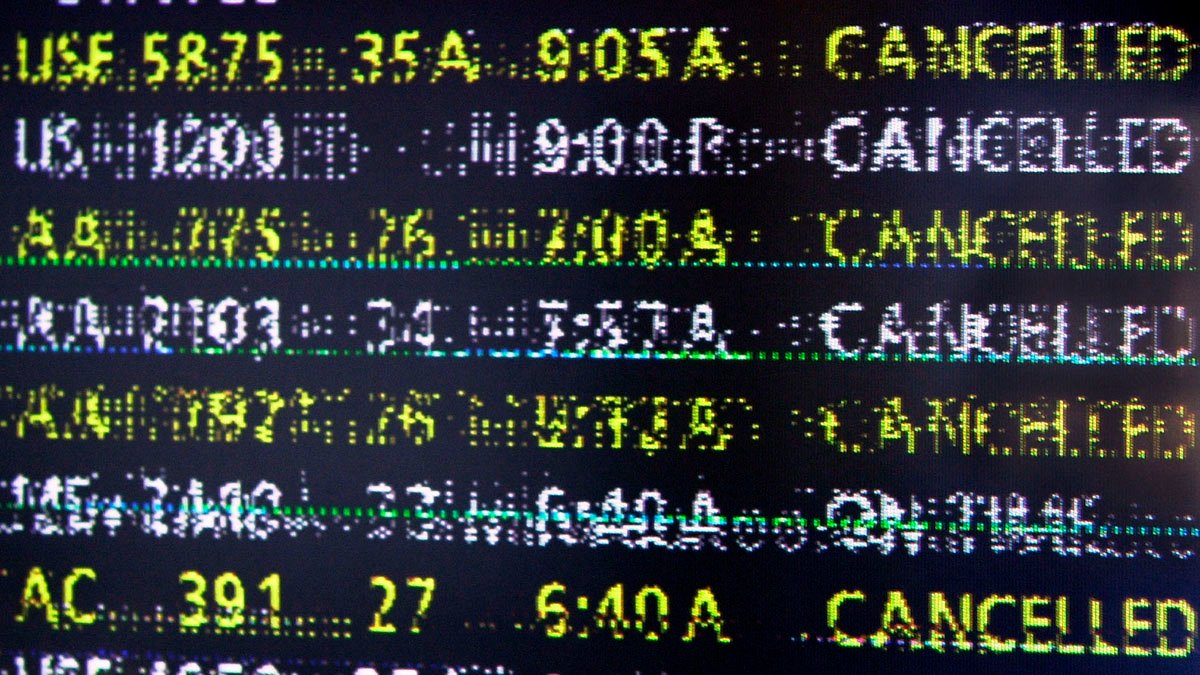
Sept. 15, 2001: A malfunctioning computer screen displays cancelled flights in the terminal of Reagan National Airport. It was the last major U.S. airport to remain closed in the aftermath of the airborne terrorist attacks on the World Trade Center and Pentagon. (Photo: Mike Theiler / AFP via Getty Images)
“And the airlines flew everything out and the airport became empty. And that was a very painful moment. Locking the doors and losing the aircraft,” Browne said.
After almost a month, DCA would reopen. Browne credits then-President George W. Bush with that gutsy decision but says he knew the airport could be protected.
But Reagan National Airport certainly didn’t reopen without some very tense moments.
Browne said defense systems had to be set up right there across the river in Anacostia.
“What people don’t remember, and there are few pictures to record it, is that there were surface-to-air missile batteries set up in Anacostia, I-HAWK missile batteries, and they weren’t there for show,” Browne said. “They were there because once we started operating, if somebody somehow penetrated the airspace that wasn’t supposed to be, they were going to get shot down.”
Even today, some weaponry along the river is a sign of the way this airspace is still protected.
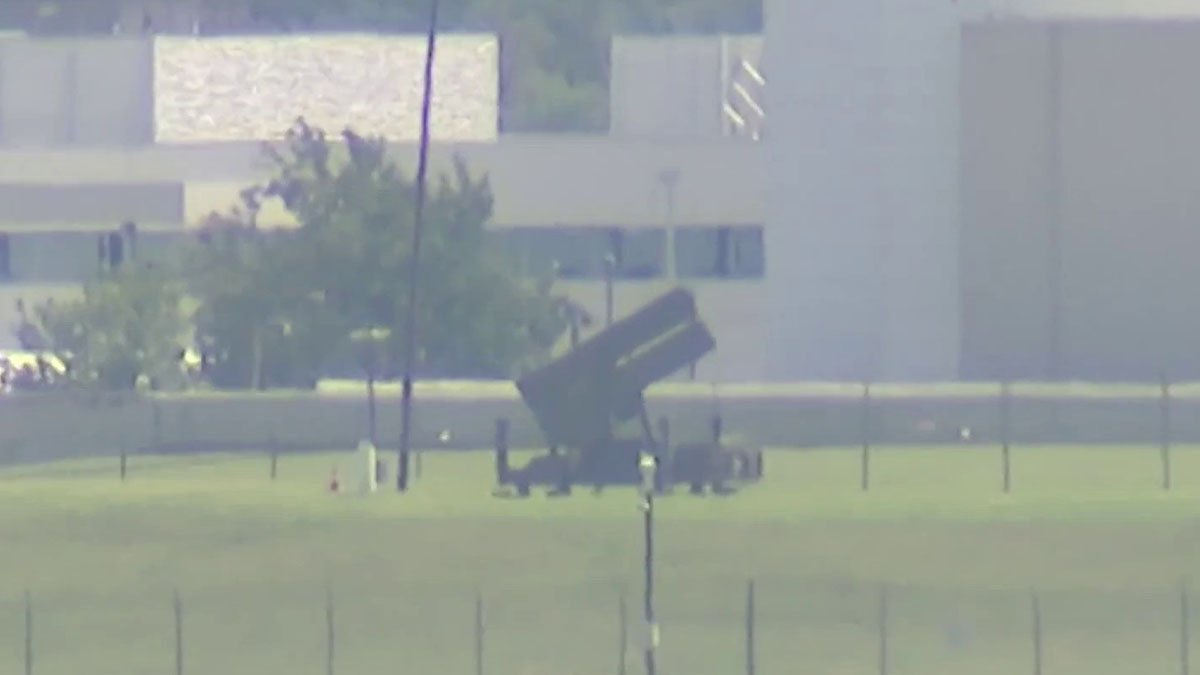
Browne is thankful for the TSA, an agency that had to be started up at record speed after the tragedy.
“They can’t be wrong once. And I think time has shown that they’ve done exceeding well keeping up with the threat,” he said.
And for what was such a dark day, Browne says there was also light: the first responders, the airline crews, air traffic controllers, and even passengers.
“There were, no doubt, heroes on that day. People that really put their lives at considerable risk,” he said.