Stay informed with free updates
Simply sign up to the UK inflation myFT Digest — delivered directly to your inbox.
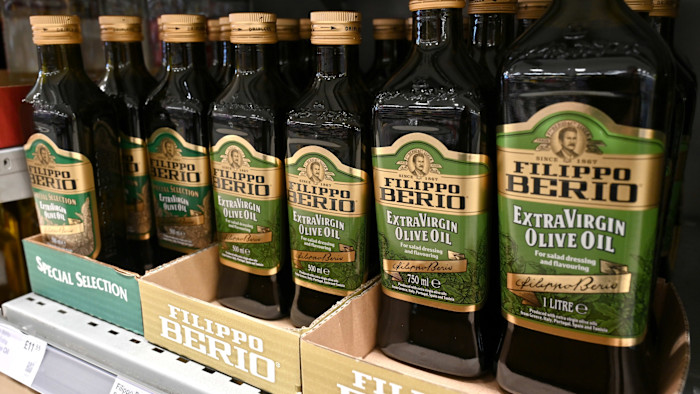
The price of olive oil has more than doubled in the past five years, more than any of the other household goods measured in new analysis of inflation data that shows how rising costs have hit the UK consumer.
The price of the popular culinary ingredient and condiment has increased by 108 per cent since July 2021, research shows, primarily due to poor harvests and higher energy costs.
Among the range of goods and services surveyed by investment platform AJ Bell, only mortgage interest costs had a higher five-yearly increase, jumping 152 per cent, according to the ONS’s retail price index.
Consumer price inflation began to take off in August 2021, when it hit 3.2 per cent and soon rocketed into double figures, peaking at 11.1 per cent in October 2022.
Although annual inflation has since fallen, it remains above the Bank of England’s 2 per cent target, at 2.9 per cent in July, and cumulative inflation over the five-year period is now 27.5 per cent, well above the 10.4 per cent that would have unfolded had the Bank hit its target.
But prices for some goods have risen significantly faster. After olive oil, the price of edible offal was the next highest riser, up 76 per cent in five years. Beef, eggs and chocolate are all up over 50 per cent as Russia’s full-scale invasion of Ukraine in 2022 pushed up fertiliser and feed costs.
The Ukraine crisis, alongside this year’s turmoil in the Strait of Hormuz, also led to elevated energy costs, with gas up 87 per cent and electricity 46 per cent higher.
In addition, some services are far more expensive than in 2021, with car insurance driven 76 per cent higher by a combination of a Covid-fuelled shortage of parts, a rise in car thefts and repair costs rising due to the spread of more advanced technology.
“It’s been a rollercoaster ride for prices since the cost-of-living crunch began [in August 2021],” said Laura Suter, director of personal finance at AJ Bell.
“Many everyday costs remain painfully higher than they were before the cost-of-living crisis began back in 2021. Five years of cumulative price rises have left a lasting mark on family budgets, from the weekly shop to energy bills, insurance and vet costs,” she added.
Moreover, one of the largest items of expenditure for many people — the cost of a mortgage — is not even included in the consumer price inflation data. Average mortgage costs surged an “eye-watering” amount, AJ Bell said.
“We entered the cost-of-living crisis with a low Bank of England base rate [0.1 per cent], but it ratcheted up rapidly to help combat rising inflation,” Suter said.
Andrew Montlake, chief executive of mortgage broker Coreco, said: “The transformation in mortgage costs over the past five years has been extraordinary.”
Five years ago, borrowers could secure mortgage rates below 1 per cent, he added. Today the best deals are above 4 per cent, adding more than £500 a month to the cost of a £300,000 repayment mortgage. “That is an extraordinary financial shock,” Montlake said.
Partly as a result of this rise, cumulative retail price inflation, which includes mortgage costs, has risen faster than the CPI measure at 36 per cent, although many statisticians have long taken issue with the mathematical model that underpins RPI.
Since August 2021, nominal wages have risen by 29 per cent since, similar to the CPI figure.
AJ Bell’s analysis found that just 13 of the 192 categories of goods and services that feed into the CPI index have actually fallen in price since 2021.
This list is headed by sound and vision equipment (down 32 per cent), personal computers (20 per cent) and information processing accessories (19 per cent).
“There are some bright spots in the data, where prices have actually fallen in the past five years but they are thin on the ground,” Suter said.
And while “technology dominates the areas where we’ve seen prices fall,” this does not necessarily mean that cash prices have fallen as far as the figures suggest: the Office for National Statistics attempts to adjust for improvements in the quality of goods over time, including through a process known as hedonic adjustment.