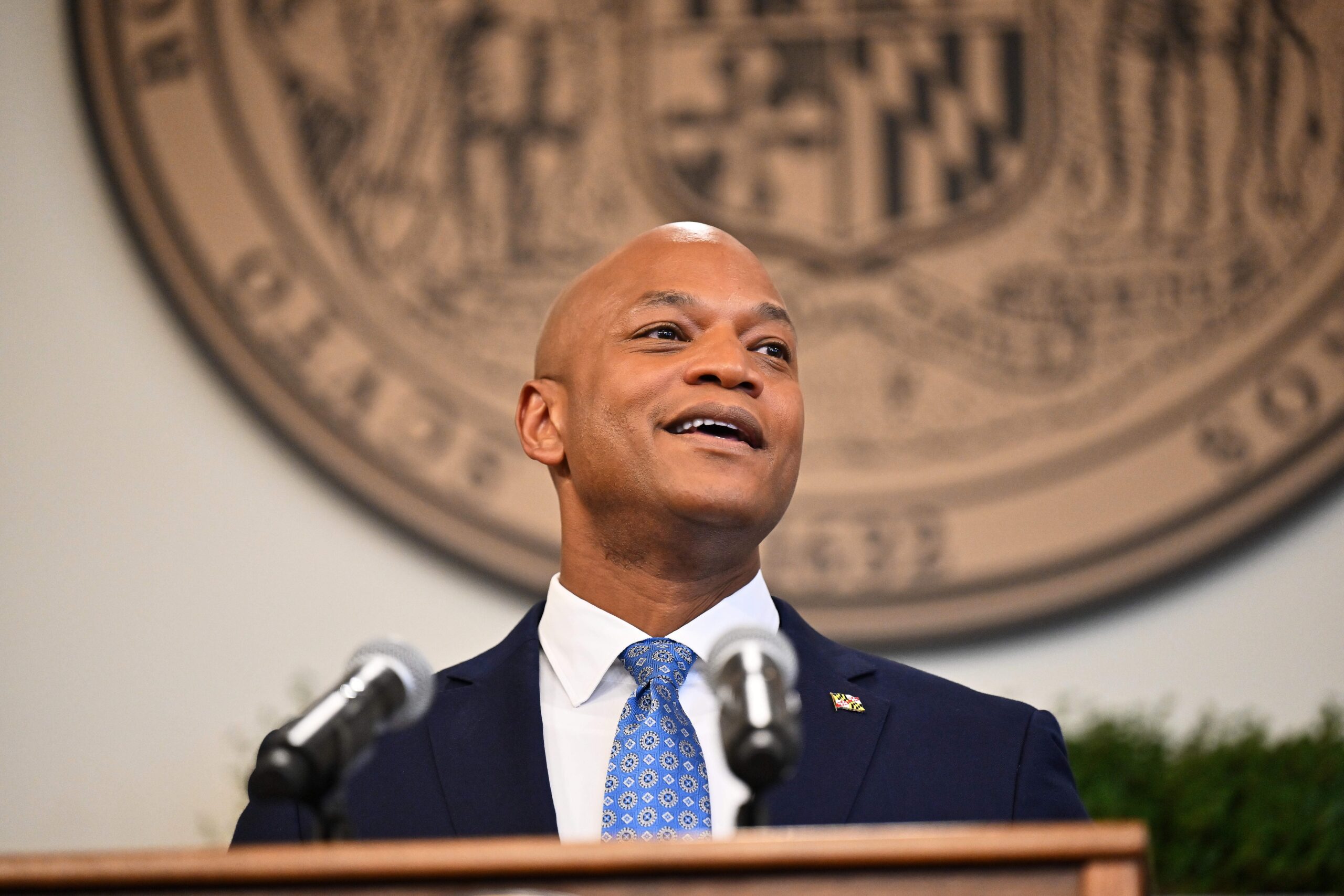
Maryland is the latest state to clamp down on artificial intelligence (AI) and data centers this week, with Gov. Wes Moore announcing a series of new guardrails.
On Tuesday, Moore announced a framework “for the responsible development, deployment, and regulation” of AI in the state, aiming to protect Maryland workers from the dangers of the technology while preparing them to “thrive alongside it.”
Then on Wednesday, Moore signed an executive order calling on state lawmakers to limit tax exemptions for data centers.
“We are establishing clear safeguards to ensure Marylanders do not foot the bill, our people benefit, community voices are heard, and our environment is protected,” Moore said of the data center guidelines in a press release.
Here’s what to know about the new regulations in both areas.
Moore’s AI framework
The Maryland AI framework has three “guiding principles,” all three of which prioritize humans over the technology: “Protecting our people,” “centering our workers” and “keeping our kids safe.”
Each of those principles categorizes more specific goals and concerns the framework will address. They include plans to:
- Recommend laws to regulate AI companies when it comes to safety, worker protections, public reporting and more.
- Establish a “Right of Publicity” so each individual owns their own likeness, so people do not need to prove harm to get relief if their face is used by a generative AI model.
- Prohibit the use of AI to discriminate in housing, specifically by banning tenant-screening tools that rely on discriminatory algorithms and banning landlords’ use of non-public shared pricing platforms.
- Ensure financial, housing and labor regulators in Maryland are informing state residents that “existing civil rights, consumer protection, housing, and lending laws already reach AI-driven decisions.”
- Issue state workplace guidance to explain how existing discrimination law applies when AI is involved.
- Create worker protections so that AI is not used to track and prevent labor organizing or used in ways that worsen systemic biases.
- Engage with unions to stay aware of how AI is affecting Maryland workers.
- Provide training on AI as it evolves, and provide opportunities for workers to learn skills in other in-demand fields as AI affects job availability.
- Strengthening chatbot protections to protect young people.
- Curb addictive, AI-based social media and chatbot design.
- Require schools to implement protocols for any AI tools students use and ensure all AI tools have demonstrated learning outcomes.
- Prepare students to make ethical choices around AI as they move through the world.
The rapid advancement of AI — and the warnings of doomsday scenarios from industry executives — has caused worldwide alarm in recent weeks. Some of that alarm comes from concerns the technology will advance beyond human understanding, or fears that bad actors will use powerful technology to harm others.
Others are more concerned about economic effects as companies invest in AI tools over human workers, or about negative mental health effects on young people.
Moore referenced inaction at the federal level in response to such concerns as part of his motivation for the state-level AI and data center policies in Maryland.
“In the absence of federal guardrails around this rapidly developing technology, Governor Moore’s AI principles are grounded in safeguards to mitigate the risks of AI, while ensuring the technology serves the people of Maryland,” a second press release about the framework said.
Moore’s data center regulations
Wednesday’s executive order on data centers outlines specific standards for new developments in the state.
Any large data center, defined as one “that covers 25 megawatts or more,” will be judged on five principles:
- Ratepayer and grid protection
- Economic benefits for Marylanders
- Community voice
- Environmental protections
- Transparency and accountability
“Projects will receive a written, public determination from the task force: Aligned, Conditionally Aligned, or Not Aligned,” the release about Moore’s executive order says.
Data centers automatically enter the review process as soon as they ask for permits or incentives. A task force created by the order is charged with performing those reviews and recommending future protections.
Maryland will also create a public website with a record of data center projects and actions in Maryland so residents are not surprised by construction in their neighborhoods.
Finally, the executive order asks the Maryland General Assembly to a tax exemption for data centers that was originally enacted in 2020.
AI’s rapid growth since 2022 has caused a parallel boom in data center construction, which has left residents in some areas of the U.S. frustrated as they see growing environmental effects and instability in the power supply.
Those frustrations have led states from Virginia to Texas to implement new regulations on data centers to demand accountability and, in some cases, reverse the incentives that led to such rapid growth.
“By signing this executive order, we are establishing clear safeguards to ensure Marylanders do not foot the bill, our people benefit, community voices are heard, and our environment is protected — all while centering transparency and accountability throughout the process,” Moore said of data centers.