Home seekers around Southern California were feeling profound sticker shock.
Median prices had hit records never seen before.
First-time buyers were desperately slapping down-payments on modest ranch homes in far-flung desert communities, enduring long commutes just to escape the rental market.
“We were lucky,” said one new homeowner who bought a place in Tehachapi, 100 miles from her workplace in Chatsworth. “I don’t know if we’d still be able to afford it.”
Welcome to the crazy housing market of 2026?
No, try 2005.
It’s easy to look at today’s steep median home prices — $885,000 in L.A. County and $1.19 million in Orange County, per Zillow — and say it’s never been worse.
But California has long dealt with cycles of soaring prices that lock out people with modest incomes. The last supercharged market in the early 2000s was fueled in part by ultra-liberal mortgages and lending that eventually sparked the global housing crisis and recession, including waves of home foreclosures.
Reforms have made lending more stringent. That, along with rising prices, have altered the demographic of the California homebuyer over two decades.

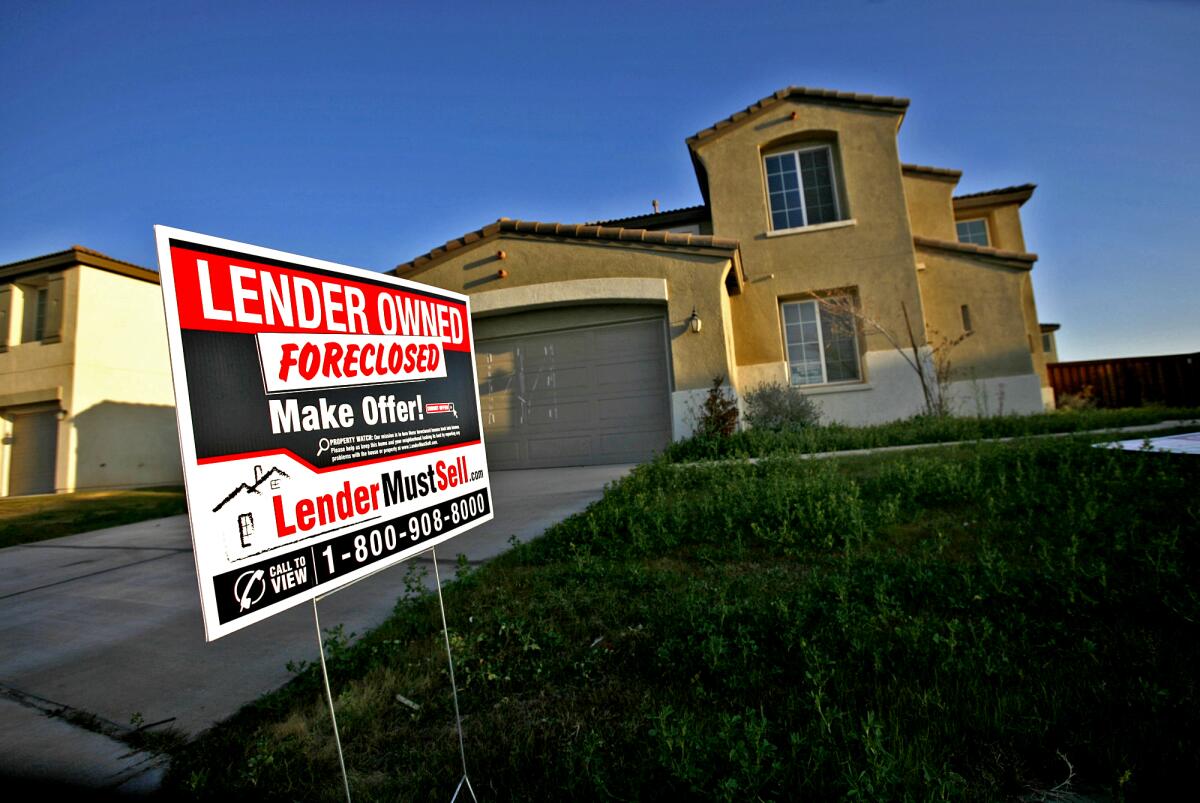
A bank-owned home in the Imperial Valley town of Heber is put up for sale in 2009 after the market crash that triggered the Great Recession the year before.
(Brian van der Brug / Los Angeles Times)
A changing homebuyer
A new analysis from The Times shows that the median homebuyer in the region has changed since 2005.
Among the findings:
- Homebuyers today can afford more, but they are older and wealthier than they were in 2005. Meanwhile, housing is even more out of reach for those in lower-income brackets.
- The average size of homes being purchased in 2026 is slightly larger when compared with 2005.
- Homebuyers tend to put more money down than in the Wild West mortgage market of the early 2000s, possibly reducing risk of foreclosure.
“The average California home buyer today looks very different than a generation ago,” California Assn. of Realtors President Tamara Suminski told The Times in a written response to questions.
“Buyers are entering the market later, saving longer, and facing higher barriers to home ownership as home prices, mortgage rates, living costs, and years of limited housing supply continue to strain affordability,” she wrote.
Richer, older buyers
It’s far from surprising that the demographics around buying a home have changed in 21 years.
In 2005, the median Southern California buyer was 40 years old and brought in an annual household income of $92,500, according to data provided by the California Assn. of Realtors. In 2025 dollars, that was over $150,000.
The average home purchased was 1,600 square feet and cost $525,000. Adjusted for inflation, that would be nearly $900,000 in today’s dollars.
By 2025, the median buyer had aged and seen an upward shift in income.
The 2025 average buyer was fully five years older — 45, compared with California’s median age of 38. The buyer took home $160,000 in annual household income.

And the home they purchased cost $820,000 on average, less than the inflation-adjusted 2005 figure. The home was 1,700 square feet, just slightly bigger than the median home 20 years prior.
Over time, home costs have risen more than earnings, said Michael Lens, a professor of urban planning and public policy at UCLA. However, the “mid to late bubble” atmosphere of 2005 saw comparably high costs.
“Part of [what happened in] 2005 was financial instruments fueling a building frenzy in places that didn’t have as much demand,” he said.
As for high costs in 2025? “Since it definitely has something to do with scarcity, that means it’s more sustainable in good ways and bad than in 2005,” Lens said. “That’s how that looks like a bubble and this looks like something else.”
More disciplined, bigger down payments
So what has changed?
The income level of the average buyer has barely increased relative to inflation. The average buyer has gotten significantly older.
The affordability issue stems more from the fact that wages have not kept pace with cost of living increases over those 20 years. Home prices have also eased up slightly relative to inflation, despite a frenzy over the state’s affordability crisis.

New home construction is underway in Pacific Palisades in February.
(Caroline Brehman / For The Times)
The median California household made around $100,000 in 2025, per census data. The average homebuyer earned about 60% above that figure. In 2005, the median household income was about $52,000 — meaning that the median buyer made 78% more than the median Californian 20 years ago. The gap between the average homebuyer and the average person has actually decreased since 2005.
For those with lower incomes, home purchases in Los Angeles County were out of reach throughout the two decades, as those who made less than the state median saw their incomes grow significantly less than those of top earners, per data from the Public Policy Institute of California.
Suminski described the 2025 buyers as resilient despite challenges: “They are more financially disciplined, building larger down payments, carefully managing their budgets, and entering homeownership on stronger financial footing than many first-time buyers of previous generations.”
Timing is everything
The 2000s are considered a particularly crazy time for the California market.
Housing prices boomed early in the decade, fueled by economic recovery and cheap loans that allowed people with shaky finances to purchase homes.
“There are pretty well-documented ways in which it was too easy to buy a home, in part because of ballooning rates that snuck up on people,” Lens said.
Today, “a homebuyer is gonna be different age-wise” and have higher earnings, he said. “They’re not super young but they’re also not super old.”
“The rosy picture here is … that the burden is not as high, so that’s good news,” Lens said. “But part of that is people waiting because the costs are high. Part of that is people waiting because people form households later in life than they used to.”
“If the price of housing goes up, then you have to wait longer and earn more to buy it.”