Iran on Friday urged its international trading partners not to abide by new U.S. sanctions targeting Tehran, insisting that attempts to economically isolate the country are “illegal and unjustified.”
In a social media post, Iran’s Foreign Ministry said “all countries are obliged to refrain from implementing” the newly announced secondary sanctions under “Operation Economic Outcast” earlier this week.
The ministry added that participating in the enforcement of the sanctions would only help Washington unilaterally impose its will on foreign countries by disrupting legal economic and trade relations.
Treasury Secretary Scott Bessent announced the new round of sanctions on Monday, hoping to add to the already suffocating U.S. economic pressure campaign on Iran.
Under the new restrictions, entities and individuals that maintain direct economic ties to Iran could be removed from the U.S. dollar system, effectively cutting them off from the world economy.
Mr. Bessent said Monday that the U.S. would give violating countries several days to comply with the new order, citing fears that immediately imposing restrictions would “blow up” the global financial system.
SEE ALSO: CENTCOM chief says Strait of Hormuz cleared of Iranian-placed sea mines
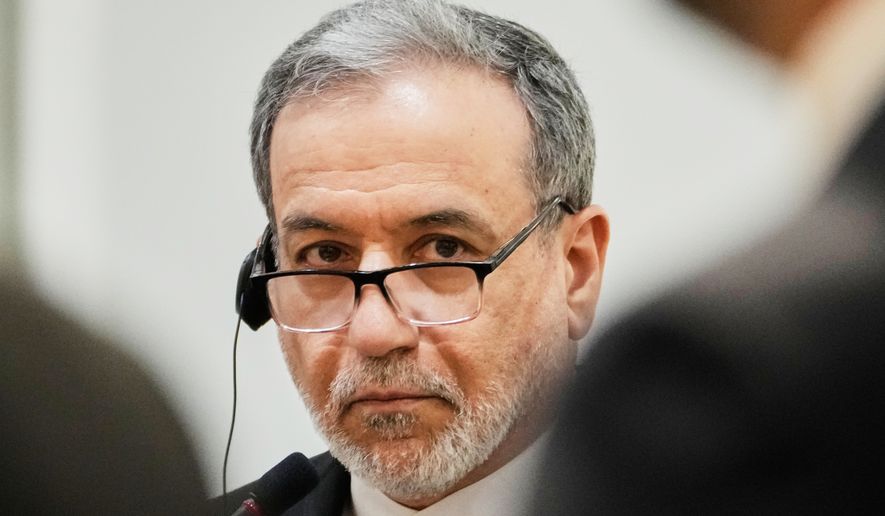
Since the announcement, Iranian officials have consistently said the new sanctions amount to “economic terrorism” and have called on the international community to reject the measures. Iranian Foreign Minister Abbas Araghchi sent a letter to the United Nations earlier this week urging the body to reject the sanctions.
Some of Iran’s major trading partners have also appeared to buck the U.S. demand to cut off economic ties this week.
Advertisement
Pakistan insisted this week that it would not obey a unilateral sanctions order from Washington and is only obliged to follow U.N. restrictions.
China also said earlier this week it has no plans to modify its trade relationship with Iran following the announcement of new sanctions. China purchases the vast majority of Iran’s oil exports and provides Tehran with key access to its banking system.
Mr. Araghchi on Friday also suggested that Iran’s relationship with Qatar, a Gulf state that manages the South Pars/North Dome natural gas deposit with Tehran, would remain unchanged.
“Putting diplomacy back on track isn’t impossible. It hinges on U.S. understanding of one simple fact: Pressure doesn’t work,” Mr. Araghchi wrote on X under a picture from his meeting with Qatari Prime Minister Sheikh Mohammed bin Abdulrahman Al-Thani this week. “The U.S. should build trust, speak respectfully, acknowledge our rights and uphold commitments.”
Story Topics