A version of this story appeared in the daily Threat Status newsletter from The Washington Times. Click here to receive Threat Status delivered directly to your inbox each weekday.
The commander of U.S. Central Command said U.S. forces have cleared all the sea mines that Iran spread along the internationally recognized maritime transit routes in the Strait of Hormuz.
In a message posted late Thursday on X, Adm. Brad Cooper called the mine-clearing effort “a major milestone” in the ongoing conflict between the U.S. and Iran. He said merchant vessels passing through the strait use a virtual highway system called a traffic separation scheme to avoid mishaps.
“Over the past few months, our forces meticulously and quietly cleared them of sea mine threats using a combination of Navy divers, Navy SEALs and U.S. air power from the Army, Navy, Air Force and Marine Corps,” Adm. Cooper said. “The circumstances were challenging and dangerous, to say the least, but we got the job done. Bottom line: Today, international shipping lanes are open, and momentum is building.”
About 20 million barrels of petroleum and crude oil — roughly 20% to 25% of all global seaborne oil trade — passed through the Strait of Hormuz daily before the conflict erupted about six months ago. Iranian sea mines and attacks on tankers have caused elevated oil and gas prices.
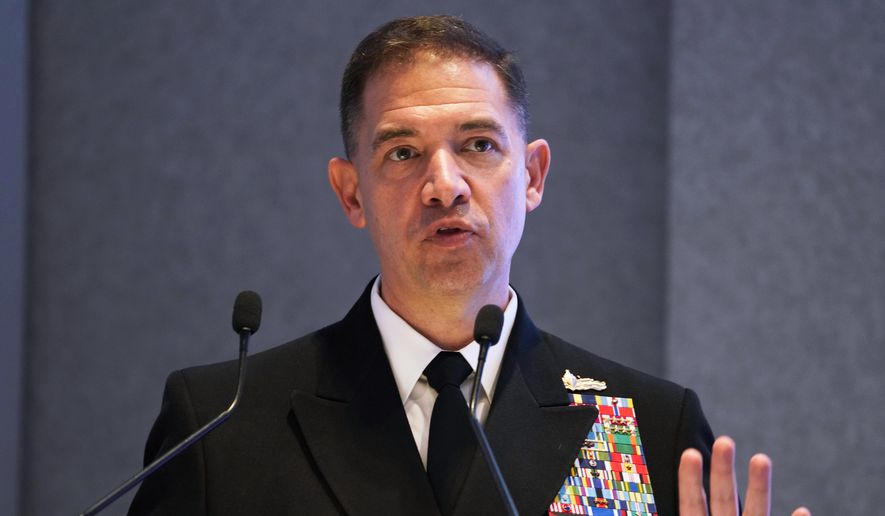
Adm. Cooper said U.S. forces protected nearly 1,500 commercial vessels transiting the Strait of Hormuz over the past several months.
“Those ships were carrying nearly 750 million barrels of crude oil, destined for global energy markets, which is a massive volume,” he said.
SEE ALSO: ‘Economic terrorism’: Iran warns other countries against enforcing U.S. sanctions
However, Iran has been unable to export any crude oil since U.S. forces resumed a naval blockade in mid-July, Adm. Cooper said, calling the strategy “highly effective.”
“Since resuming the blockade, thousands of U.S. service members, operating more than 20 warships and hundreds of aircraft, have sustained our success, turning around 75 vessels attempting to run the blockade and disabling three vessels that did not comply when directed,” he said.
Advertisement
A spokesman for the Islamic Revolutionary Guard Corps said Wednesday the Strait of Hormuz, including waters off the coast of Oman, would remain under Tehran’s military control until the U.S. accepts its demands. In June, Tehran and Washington both agreed to a memorandum of understanding brokered by Pakistan that outlined a regional ceasefire that would eventually result in the reopening of the Strait of Hormuz.
A month later, Iran struck merchant ships traveling through the strait, which led to U.S. retaliatory strikes that essentially ended the agreement.
“If the United States stops obstructing and returns to the memorandum, we can reopen the Strait of Hormuz within the framework of the agreement,” the IRGC spokesman said. “If the United States does not accept our conditions, the Strait of Hormuz will not be opened under any circumstances.”
Story Topics