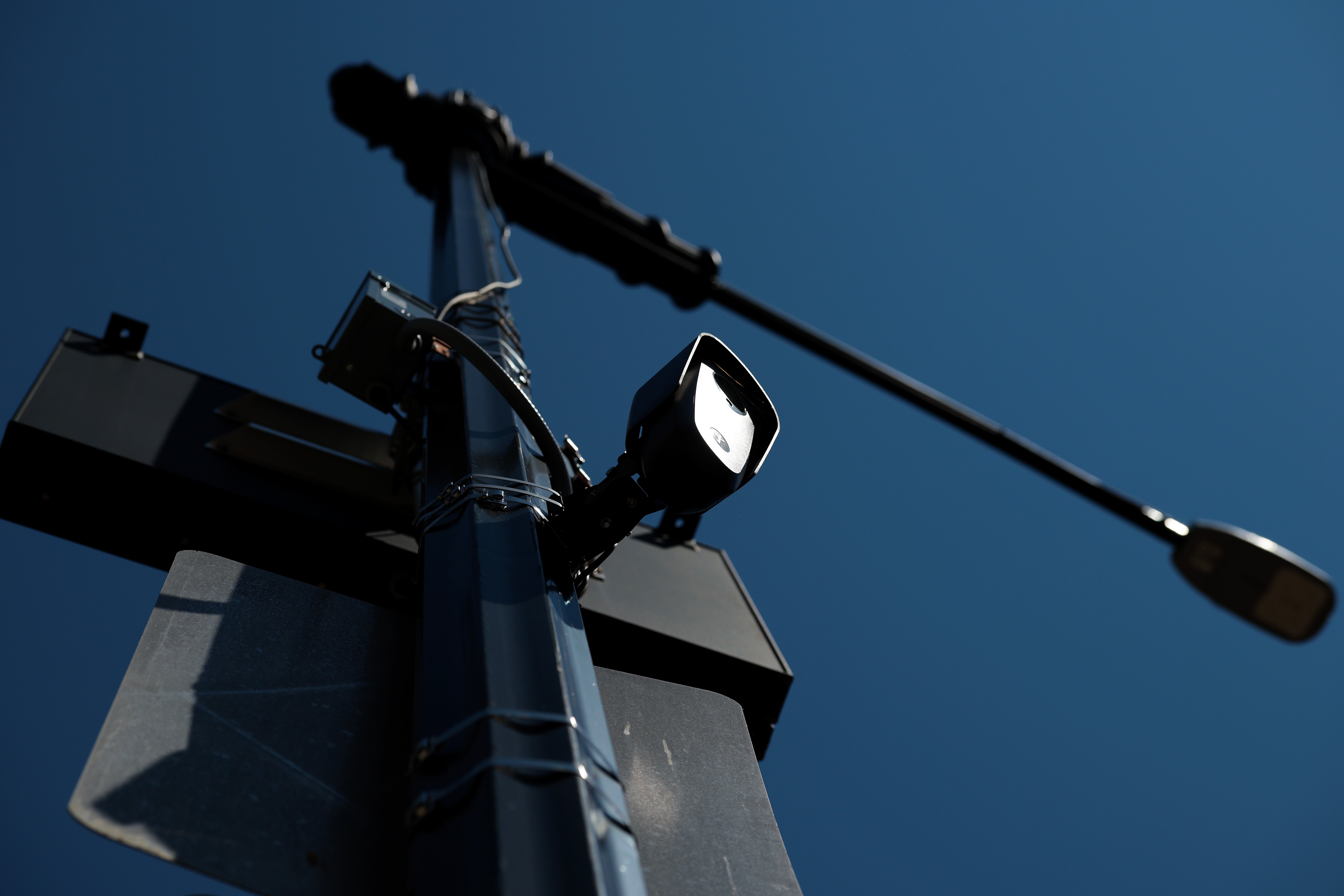
There’s a new addition to the list of Flock Safety camera critics in the D.C.-area: The D.C. police union questions if and how the camera network should be utilized by its own department.
“A system with such broad and extensive capabilities requires not only significant guardrails, but also full transparency with the public,” Gregg Pemberton, the president of the union, said in a statement released Thursday morning. “The MPD has provided neither.”
The statement also claimed officials at D.C.’s Metropolitan Police Department (MPD) improperly used data obtained by the Flock system, though it did not specify what the improper use was or which members of MPD management were involved.
According to the statement, the police union identified “improper use by management” in July and “immediately” filed both misconduct complaints about their findings and a grievance demanding the actions stop.
The union said the department denied the grievances and refused to investigate the managers involved.
The same day the department denied the grievance, it also restricted MPD-wide access to the Flock Safety data, the statement claims.
News4 reached out to MPD Thursday for more information on the union’s claims, asking how and where the department is using Flock cameras, what the “improper use by management” was, and who in the department currently has access to the data gathered by Flock.
The department’s emailed response did not answer who at MPD can use Flock camera data or where the cameras are used.
MPD did state that the union filed their grievance after an internal investigation used camera data to look into a union member’s misconduct. MPD also said the last time their license plate camera policy was updated was before the July incident.
“The DC Metropolitan Police Department (MPD) has a stringent policy regarding the use of license plate reader (LPR) technology that was updated in April 2026,” MPD said in an email to News4.
“The DC Police Union has filed a grievance against the DC Metropolitan Police Department about the use of LPR in an Internal Affairs investigation into the misconduct of a union member. The Department’s position is that the use of LPR in the misconduct investigation was appropriate.”
“This grievance involves a union matter, and it will be resolved through arbitration between MPD and the DC Police Union,” the statement concludes.
While the Flock Safety camera system has been championed by many police forces, privacy concerns have grown, NBC News reported in August.
Law enforcement offices that contract with Flock do not need a warrant to access travel information and can opt to share their data with local law enforcement offices, statewide or nationwide, creating a database of Americans’ real-time movements accessible to a range of police officers that spans much of the country.
Police officers have been repeatedly accused of stalking people with the technology, and a Wisconsin police chief threatened to perform background checks on Flock critics.
The cameras garnered significant attention in recent months as Americans nationwide voice concerns about misuse of the AI cameras and the data they collect on anyone who drives past.
A proposed bill banning the cameras statewide in Virginia has garnered bipartisan support.
D.C.’s police union did not go as far as denouncing Flock Safety cameras entirely, but did urge the department to develop clear and fair guardrails around the use of the system.
“For years, thousands of cameras have been operating across this city,” Pemberton said in the union statement. “The problem is not the camera. The problem is that the full capabilities of this system remain unknown, and the guardrails needed to prevent misuse have not been properly negotiated or implemented by MPD.”
The union says it is looking into further challenges to the way the department is using Flock camera data.