In the Silicon Valley enclave of Atherton, a six-bedroom, nine-bath mansion featuring a theater, a private rose garden and a spa hit the market earlier this year for nearly $32 million.
It found a buyer within 72 hours, more than half a million dollars above asking.
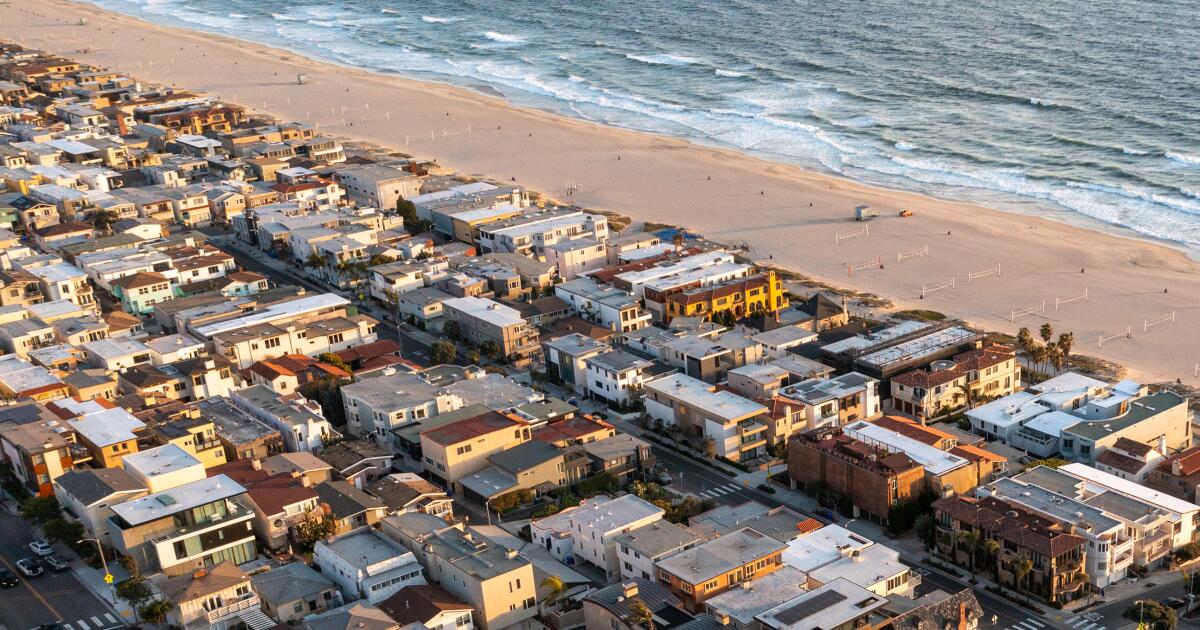
Even in one of the world’s most exclusive communities, the deal was remarkably fast — a testament to the fresh wave of tech riches washing over the San Francisco Bay Area from a booming AI industry and blockbuster IPOs. Nowhere is that wealth more pronounced than Atherton, a longtime billionaire refuge that’s now seeing resurgent real estate demand.
The town of roughly 7,000 residents has already recorded five property sales of at least $30 million this year, compared with a record of six in all of 2025, according to Tom LeMieux, a broker associate with Compass in the area who collected data going back to 2019. The median home price has surged 20% to almost $10 million in the first half of 2026 compared with the same period last year, PropertyShark data show.
With the boom, Atherton has regained the title of the most expensive U.S. ZIP Code, surpassing Miami’s Fisher Island, according to PropertyShark.
“The demand is among the strongest I have seen in my career,” said Ken DeLeon, a luxury Realtor in the area for more than two decades. He estimates that more than 50 homes will sell for at least $10 million this year, comparing the boom to the “frenzied feel” of the 2000 dot-com era.
Atherton’s heated demand offers a snapshot of the Bay Area’s increasingly K-shaped economy as the artificial intelligence industry rapidly expands. The same AI boom that has created extraordinary fortunes for founders and investors has also been used to justify layoffs and worsened affordability challenges for much of the region.
As inequality deepens across the state, drawing mounting backlash, California voters will decide on a ballot measure in November that would levy a one-time 5% tax on billionaires to help pay for healthcare. The measure has sparked concern of an exodus of the ultrawealthy, with prominent billionaires including Google co-founders Larry Page and Sergey Brin increasing ties to other states.
Yet, the frenzy in Atherton suggests that there’s still plenty of rich people willing to put down roots in the area. Many ultra-high-net-worth individuals “have deep business, family, and social ties to Silicon Valley, so those connections tend to outweigh their overall decision making on where to own a home,” said Dana Carmel, a luxury real estate agent in the area.
Private security
Across the country, the number of ultra-expensive homes has also multiplied. Sales over $100 million have steadily increased since the milestone was first hit in 2007 and last year, 11 U.S. homes sold for more than $100 million, according to data compiled by Jonathan Miller, director of markets at StreetMatrix. Seven of them were in Florida. The top 1% of priciest homes in the U.S. start just under $5.5 million, according to Realtor.com.
Atherton’s sprawling estates have long been a magnet for captains of the tech industry and investors. Century-old oaks line its quiet streets, with few sidewalks and no commercial downtown, shading the homes of venture capitalist Marc Andreessen, WhatsApp co-founder Jan Koum, as well as Golden State Warriors star Stephen Curry and Republican gubernatorial candidate Steve Hilton.
The money pouring in is helping gradually transform the enclave. Older homes are being torn down, replaced by sleek new constructions, and private security forces can be spotted along residential streets, parked in front of gates and hedges.
Dale Buckner, chief executive of Global Guardian, said Atherton is the company’s top ZIP Code for residential security — even bigger than the New York and Washington, D.C., metro areas. Across town, Global Guardian has 60 people watching clients’ properties 24/7. Some homes have converted their garages or pool houses into surveillance footage stations.
“If you think about the wealth gap, the concept of the mob where the poor start to act out and target the wealthy, that’s the concern,” Buckner said.
Privacy fears are also pushing more of Atherton’s ultra-luxury real estate market to the shadows. Hugh Cornish, a real estate agent at Coldwell Banker Realty, said that an increasing number of homes have begun to sell off market for that reason. Last year, about 24% of homes in Atherton sold off public listings, up from 21% a year prior, according to Cornish.
Purchases are also handled through limited-liability companies that shroud the actual residents’ identities. The buyer of the $32-million house that sold earlier this year, for instance, was an LLC tied to Multi-Fineline Electronix, one of the world’s largest manufacturers of flexible circuits, property records and state business filings show. The technology is a crucial yet obscure piece of smartphones and wearable devices, including emerging AI gadgets.
Teardowns, IPOs
Developers are cashing in on the wealth boom by selling properties that were recently torn down and turned into modern mansions.
Two years ago, a developer bought a property on Mandarin Way, then a modest one-story ranch house, for $5.7 million and tore it down. In its place rose a modern five-bedroom home with a retractable glass wall and oak floors throughout, that quietly sold in April for $31 million to a Silicon Valley developer who owns another home a few blocks away, according to property records.
Sales at this price point, once exceedingly rare, are becoming a new normal.
“Atherton’s luxury market hasn’t simply gotten more expensive,” said Carmel. “The market has migrated into entirely different price categories.”
Even more money is expected to flow in, as companies like OpenAI and Anthropic PBC, now worth close to $1 trillion, prepare to go public. Its employees have been rewarded with hefty pay packages and unprecedented liquidity access through secondary share sales.
SpaceX’s record-breaking initial public offering last month briefly made Elon Musk the world’s first trillionaire and also created several other ultrawealthy Californians.
“I almost feel like there’s the drummer in the background setting the tone,” DeLeon said. “And I just feel the pulse of the music picking up. The dance circle’s getting more intense and the crescendos are coming upon us and so I’m excited.”
Maglione and Alexander write for Bloomberg.