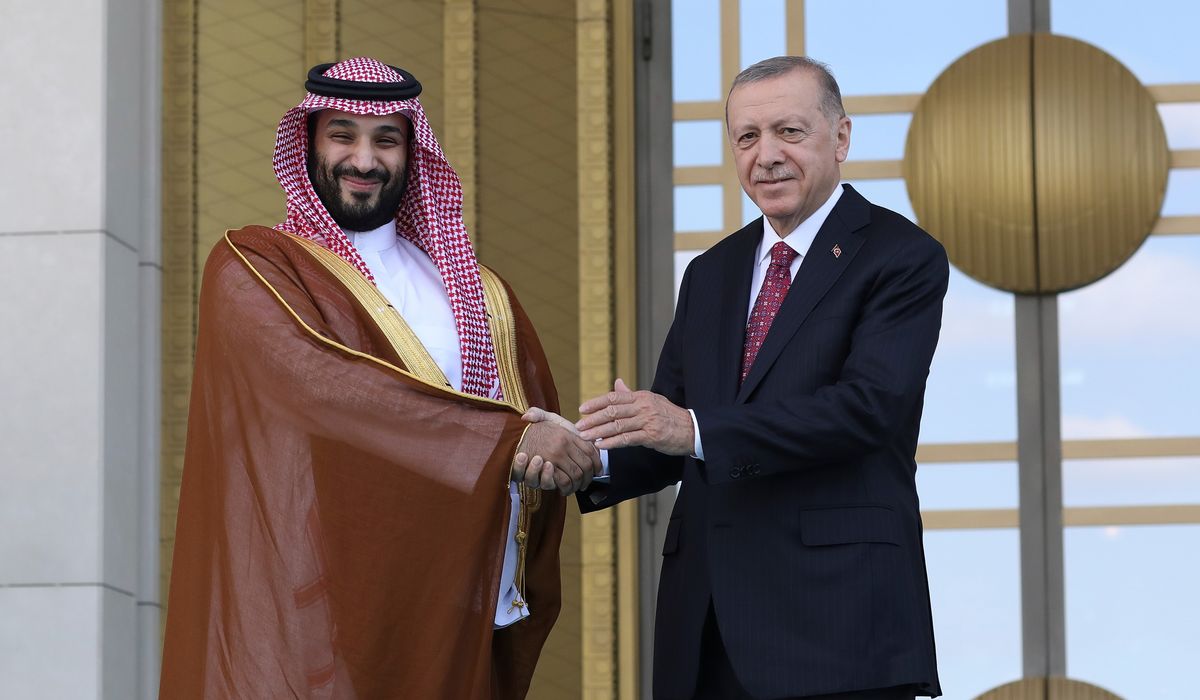
Saudi Arabia and Pakistan expanded their mutual defense agreement on Friday by signing a new trilateral pact with Turkey, deepening the regional security partnership as the war in the Middle East continues.
The agreement, called the “Makkah Joint Defense Agreement,” is meant to strengthen the “collective deterrence against any act of aggression” and states that an attack on one country would be considered an attack on them all, according to Pakistan’s foreign ministry.
The deal was signed in Mecca, Saudi Arabia, by Turkish President Recep Tayyip Erdogan, Crown Prince of Saudi Arabia Mohammed Bin Salman and Pakistani Prime Minister Shabaz Sharif.
The Saudi government also confirmed that the deal includes provisions for increased “defense cooperation” between the three nations, adding that the agreement reflects the “joint strategic interests” of the Islamic nations.
The deal itself brings together the Middle East’s largest military in Turkey, a massive cultural center and oil exporter in Saudi Arabia, and the only nuclear-armed Islamic country in Pakistan.
The Makkah agreement expands upon the “Strategic Mutual Defense Agreement,” signed between Saudi Arabia and Pakistan in September, which also called for increased defense cooperation and contained a mutual defense clause.
SEE ALSO: U.S. chock-full of munitions, Trump says, pushing back on claims of shortfall
The full text of that agreement and the Makkah deal have not been released.
However, both pacts came after significant developments in the region and underscore how the Middle East’s regional powers are maneuvering to shift the balance of power away from Israel and Iran.
Advertisement
Last year’s agreement followed the Israeli attack on Hamas negotiators in Doha, Qatar, as negotiations to end the war in Gaza were in progress. The strikes reportedly infuriated Arab leaders, leading, among other things, to the signing of the SMDA.
The Makkah agreement in turn comes against the backdrop of an expanding war in the Middle East that saw Saudi Arabia hit dozens of times by Iran, the Houthis and Iran-aligned militias in Iraq.
The arrangement establishes a regional security framework reminiscent of NATO, designed to prevent local conflicts from spiraling into uncontrollable wider wars. It also could facilitate enhanced coordination among the three nations to eliminate persistent asymmetric threats across Yemen, Iraq and Syria.
The outsized influence the three countries may have under the agreement could prove an issue for the U.S., as it looks to balance its long-standing relationship with Israel and Muslim-dominated nations.
Story Topics