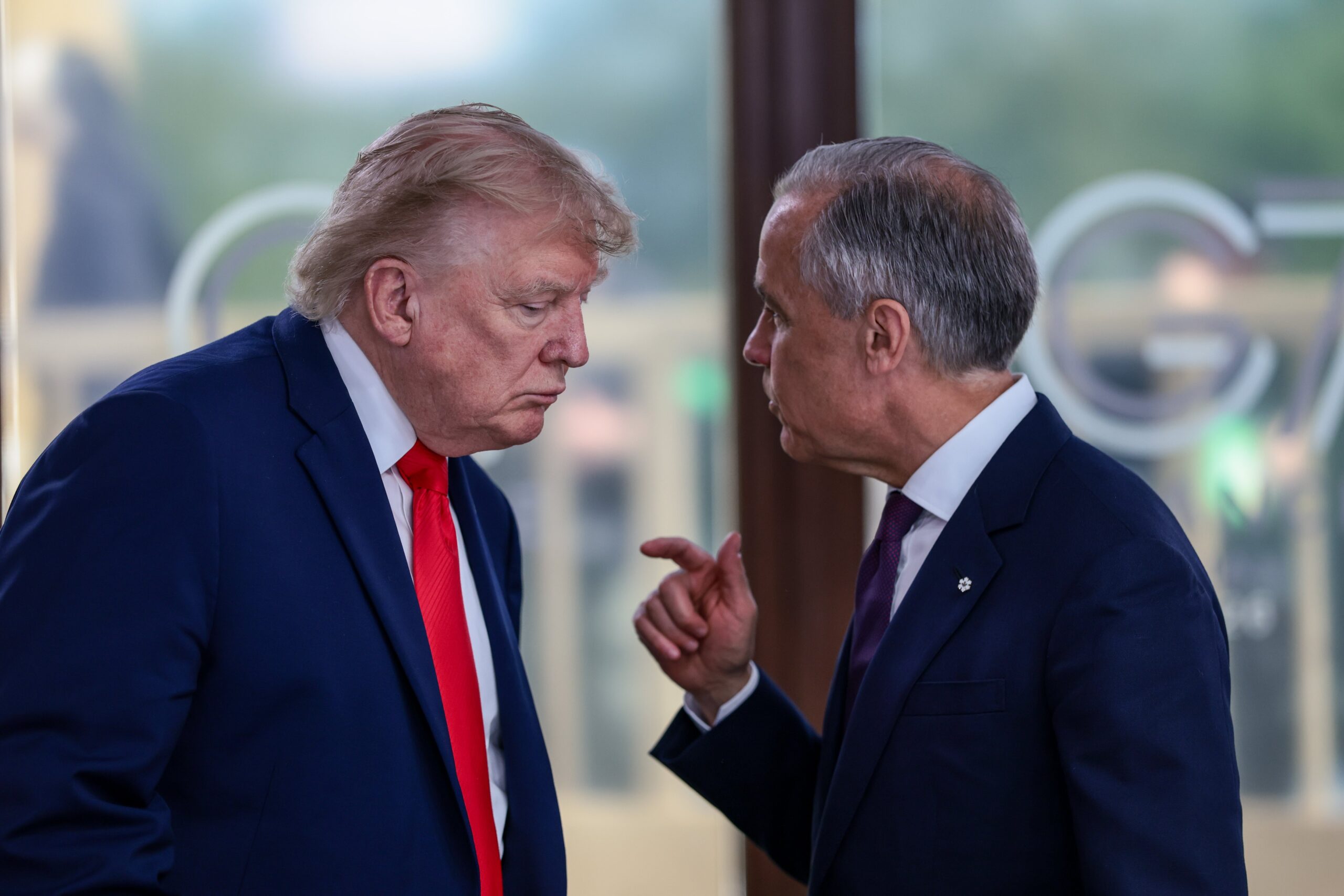
President Donald Trump on Monday hit back at Canadian Prime Minister Mark Carney, who on Friday had announced he would retaliate against any new U.S. tariffs on Canadian goods.
Writing on Truth Social, Trump threatened to hit imported cars, trucks, automobile parts and steel with 50% tariffs starting January 1, 2027.
“Canada has been ripping off the United States of America for years,” Trump wrote. “On Trade, and in other ways, also, they are among the worst Nations in the World to deal with.”
Canada ranks as the third highest source of U.S. imports. In 2025, more than $380 billion worth of goods were brought over the border, according to U.S. Census data.
Monday’s escalation follows a wave of new tariffs that hit Canada early Saturday after weekslong negotiations between Washington and Ottawa broke down.
Carney pulled Canadian negotiators out of those talks late Friday after he said the U.S. “proposed new terms that were uneconomic” and “unfair.”
Steel is synonymous with construction, but it may surprise you how many everyday items rely on the metal. Here are five things that could get more expensive due to steel and aluminum tariffs.
Those 50% duties, which came into effect at 12:01 a.m. ET on Saturday, ensnared a wide swath of Canadian goods, from hockey sticks to building materials.
“We cannot control the storm blowing in from Washington,” Carney said Saturday. “Canada will match Washington’s new tariffs dollar for dollar in order to protect Canadian workers, farmers, families, and businesses.”
Moments before Trump’s social media post, U.S. Trade Representative Jamieson Greer tried to publicly downplay the impact of the tariffs that hit on Saturday morning.
“I think the markets understand that this affects a very small amount of trade,” Greer told CNBC. He added that he would not use the term “trade war” to define Saturday’s tariffs.
In Carney’s view, however, Canada has been attacked by the United States, which for decades has been one of its closest partners and allies.
“You’re at war when you get attacked,” Carney told reporters in Ottawa on Saturday. “We got attacked.”
Toronto Raptors fans booed “The Star-Spangled Banner” before a match against the Los Angeles Clippers after President Donald Trump announced new import tariffs on Canada.
Carney noted that Canada had waited to retaliate “until the United States decided to actually implement these so-called [Section] 338 tariffs.”
After Trump’s announcement Monday, Ontario premier Doug Ford, who leads Canada’s most populous province, told the Associated Press that Trump had “declared war, economic war against his closest friend and ally.”
“Everything is on the table” in terms of retaliation, said Ford. He noted that cutting off electricity flows to the U.S. and restricting the exporting of critical minerals were some of the ways Canada could retaliate.
“I’ll cut them off,” Ford said, referring to critical minerals. “You won’t get a grain of sand out of Ontario.”
On Sunday, Bloomberg News reported that Carney was designing Canada’s retaliation measures to remain in place for the duration of Trump’s term as president, if necessary.
In his Monday post, Trump did not specify whether automobiles and parts that are compliant with the U.S.-Mexico-Canada trade pact would continue to be exempt from additional tariffs. Canadian-made vehicles that do not meet USMCA requirements currently face a 25% U.S. tariff.
Steel imported from Canada currently faces a U.S. tariff of 50%. It was not clear Monday whether Trump’s announcement meant that the tariff would rise to 100%.
If fully implemented, the increased tariffs on autos and parts could be the most disruptive for consumers and automakers.
The U.S., Canada and Mexico have a deeply integrated auto supply chain and manufacturing process. Vehicles often cross borders multiple times before they are fully assembled and sent to dealerships.
Trump’s latest waves of tariffs could also spell further doom for the USMCA trade deal, which Trump negotiated and signed during his first term after ripping up the 1992 North American Free Trade Agreement, or NAFTA.
On July 1, the Trump administration announced that it was not going to renew the USMCA in its current form, plunging it into uncertainty with a series of rolling annual reviews and negotiations.
Eleanor Skelly contributed.