Within days, almost 200,000 Salvadorans living in the U.S. could lose temporary protected status. TPS protects them from deportation and allows them to work in the country legally.
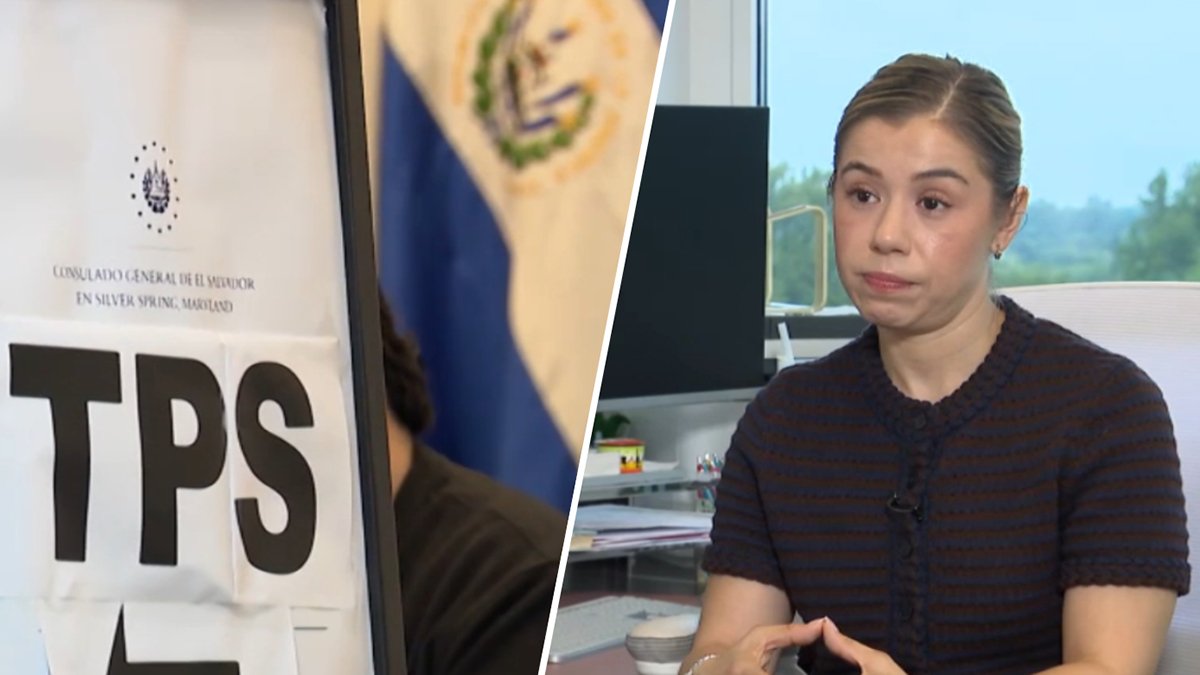
News4 interviewed homeowner Daysi Gonzalez on Wednesday. The TPS holder moved to the U.S. from El Salvador as a young child and built a life and career here. We heard several questions and comments in response:
Couldn’t she have applied for citizenship?
Should have applied for a green card a long time ago!
Why did they never become citizens?
News4 spoke with immigration attorney Kelley Ortega to get some answers. She said many TPS holders are stuck in legal limbo: They can live here and work here but there aren’t permanent solutions.
“Many of these people, even though they’ve been here, they pay their applications, they file properly, they maintain their eligibility, contributing billions to the economy, don’t qualify for independent applications for a green card that could lead to citizenship,” Ortega said.
TPS holders like Gonzalez are not eligible for Deferred Action for Childhood Arrivals (DACA), which provides protection from deportation for those who came to the U.S. as young children.
“That misconception that being here automatically creates a pathway is misinformation,” Ortega said. ”And so, unfortunately for these individuals, they’re just caught in the middle where they’re basically having to respond to whenever the decision comes, hopefully next week.”
Answers to top questions on temporary protected status (TPS)
News4 asked Ortega some of the other questions viewers have asked.
Can TPS holders vote? No, she said.
Do TPS holders qualify for public benefits? No, she said.
To maintain TPS, do officials check criminal records?
“Every time someone renews, they undergo a biometric check, which checks their criminal history and also their immigration history,” she said.
Do TPS holders pay taxes? Yes, she said.
Temporary protected status was granted to Salvadorans in 2001 after earthquakes struck the Central American country. It has been renewed by multiple administrations ever since.
The Trump administration has not officially said if it will allow TPS to expire for Salvadorans on Sept. 9. But it has said in the past that TPS has acted as a de-facto amnesty program that was not meant to be permanent.
Without comprehensive immigration reform, people who have built their lives in the U.S. may have to leave.
“These individuals don’t want it to be temporary. They want something else. They want something permanent,” Ortega said. “But Congress hasn’t made it available. Without that, they’re stuck depending on what the government offers – and with children, businesses, homes, communities that depend on them, it’s only us to suffer along with them.”
Some TPS holders could receive protection through something called a cancellation of removal for non-permanent residents. To quality, a person would need to have lived in the U.S. for at least 10 years, with no criminal history, and must provide proof that deportation would cause exceptional or unusual hardship to a family member who’s a citizen or permanent resident. It does not extend to every TPS holder.
A man who claims he was assaulted by ICE agents earlier this month is now asking police to investigate. News4’s Mauricio Casillas reports.