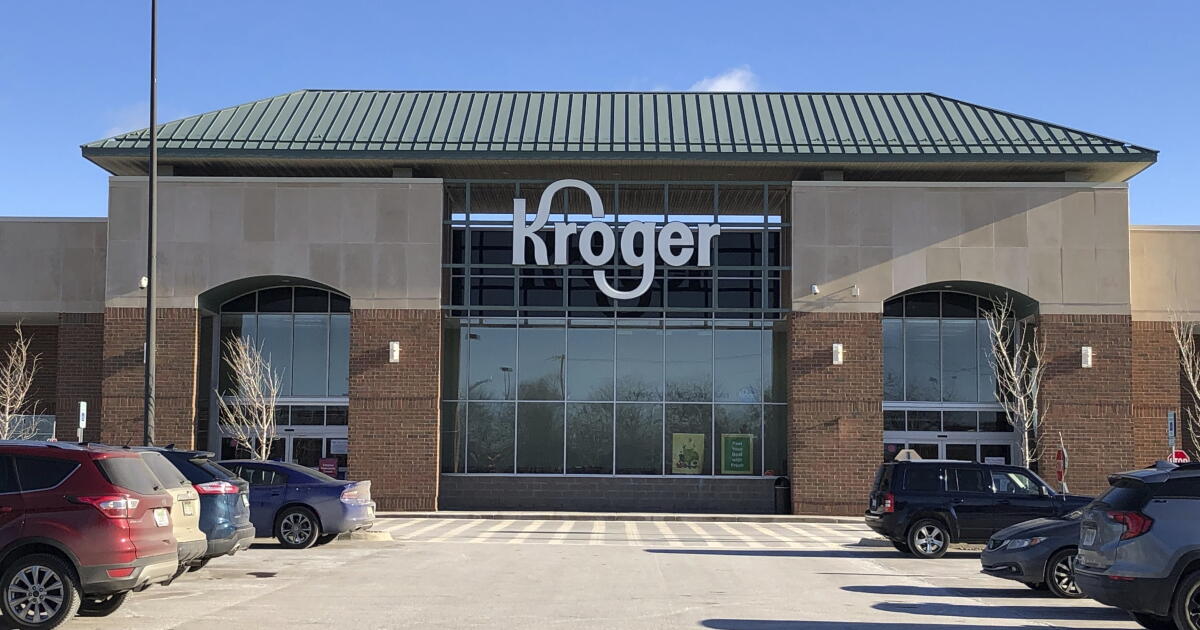
Kroger Co. trimmed its annual sales guidance, signaling that heightened inflationary concerns and fierce competition for grocery spending are weighing on the retailer.
The company expects comparable sales excluding fuel, which measure stores open at least 15 months, to gain as much as 0.8%, lower than its previous forecast calling for a high of 2% growth.
The reduced outlook heaps more pressure on Chief Executive Officer Greg Foran, who is seeking to capture market share by lowering prices, improving store services and investing in the company’s workforce. Kroger is also looking to boost online sales.
Wall Street has remained somewhat skeptical: Kroger shares had declined about 9% so far this year through Thursday’s, compared with an 11% advance for the S&P 500 Index. The stock fell 1.6% at the open of regular trading on Friday.
The grocer said its sales forecast includes the impact of federal negotiations that have led to lower drug prices, which are weighing on the pharmacy business.
Inflationary pressure
Consumers remain under pressure and are keeping their budgets tight amid elevated gas prices, Foran said on a call with analysts. Kroger’s unit sales growth has slowed since the start of the year, with shoppers buying products on need.
Food prices rose slightly last quarter from the prior period. As gas prices remain high, inflationary pressure has increased and is expected to mount, according to Foran. The company will continue to work closely with suppliers to ensure that price changes are justified.
“Historically, when you get an environment like this, you start to see it flow through,” Foran said. “It is something that weighs on my mind.”
At the same time, the parasite outbreak this summer weighed on demand. Its impact continues to linger, though that’s showing some improvement week by week, executives said. For the quarter ended Aug. 15, Kroger’s comparable sales missed expectations, though adjusted earnings beat on improved profitability of the e-commerce business, tariff refunds and other factors.
While U.S. shoppers remain resilient overall, they are more selective after years of high inflation. Americans are buying food items on sale or favoring cheaper store brands, and are willing to shop around — or even wait — for the best deals. Higher gas prices stemming from the Iran war have tightened their budgets in recent months, especially hurting lower-income households who are also confronting reduced government food assistance benefits.
Price, store investments
Walmart Inc., Albertsons Cos. and other retailers have said in recent months that they planned to keep prices of food competitive to appeal to price-sensitive consumers and gain share.
Kroger said it invested to lower prices in various regions and is encouraged by early results, executives said on the call. It received an immaterial amount of tariff refunds during the quarter, which the company put toward price investments.
Foran, who started as Kroger’s CEO in February, has signaled big changes. The company agreed to acquire Giant Eagle Inc. to expand its Northeast footprint and has named new senior executives that include Walmart alumni like him.
Kroger is working to improve in-stock availability, merchandising and managing shrink. Going forward, the company said it will continue to upgrade its value offering and simplify the types of discounts it highlights.
Kang writes for Bloomberg.