KISUMU, Kenya — As U.S. antiabortion groups’ campaign to restrict abortion access at home and abroad has gained strength since President Trump returned to office, his administration is delivering new global momentum to the movement by exporting its view of “family values” to nations overseas.
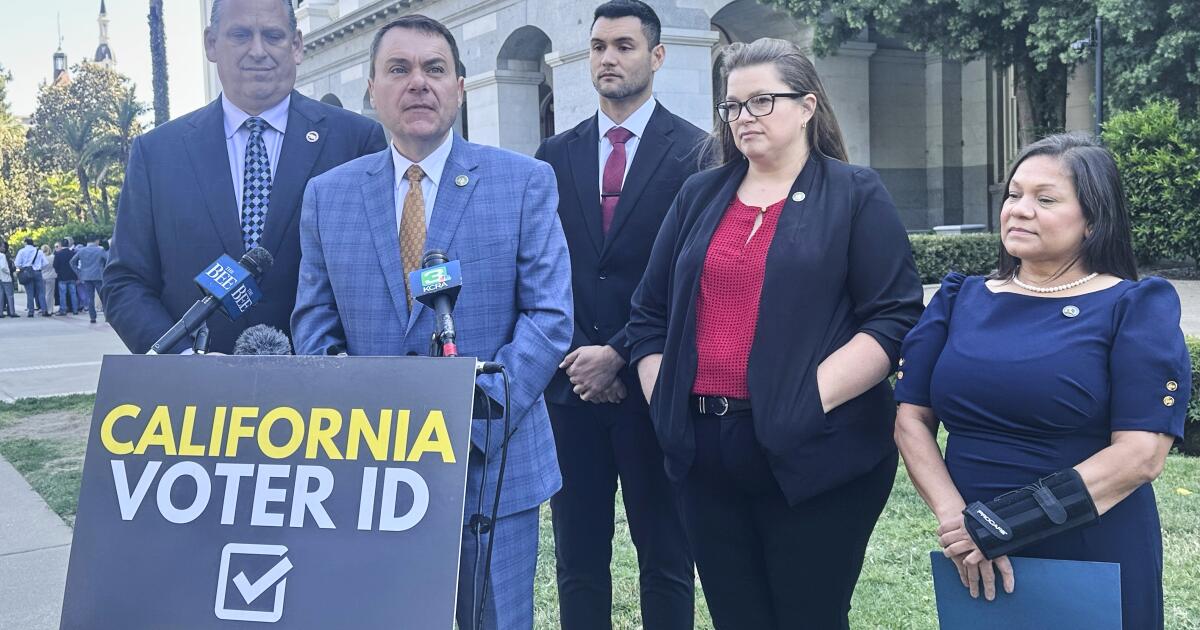
At the annual March for Life demonstration in January in Washington, Vice President JD Vance announced sweeping new restrictions on U.S. funding for nongovernmental organizations, foreign governments and U.N. agencies that promote access to abortion, gender-affirming care and diversity initiatives overseas. “We’re going to start blocking every international NGO that performs or promotes abortion abroad from receiving a dollar of U.S. money,” he told the crowd.
That effort has been particularly active in Africa, where doctors and advocates now describe an environment of rising harassment, arbitrary detentions and deadly backstreet abortions, with often deadly results for women across the continent.
The expanded restrictions build on the antiabortion advocacy work carried out by conservative U.S. nonprofits abroad — especially in Africa, where healthcare is highly dependent on foreign aid. The region has the world’s highest estimated proportion of unsafe abortions and highest maternal mortality rates — including the highest number of maternal deaths per 100,000 abortions.
The new rules represent a radical expansion of earlier U.S. policy that cut assistance to overseas groups providing abortion-related services. Experts say at least $30 billion in U.S. aid could be affected, reshaping health policies worldwide.
“We’re seeing opportunity here to have a consistently pro-life ethic,” Nicole Hunt of Colorado-based Focus on the Family, a conservative Christian evangelical group, said. “We’ve been influencing health policies for a long time with our foreign aid. This is just a new direction.”
In the crosshairs is an international convention signed by African countries two decades ago declaring safe abortion a human right. Known as the Maputo Protocol, it obliges signatory nations to legalize abortion in cases of rape, incest, fetal malformation or risk to a woman’s health.
But implementation has been spotty, forcing women to seek illicit procedures. Every year, sub-Saharan Africa records more than 6 million unsafe abortions, according to the African Institute for Development Policy. U.S. antiabortion groups now aim to overturn even this limited access to safe abortion.
In Nairobi, Nardos Hagos of the International Planned Parenthood Federation said she is deeply worried for the future.
“We’ve now moved into a new era where we are the ones who are in opposition because the most powerful and influential supporters of reproductive health — the U.S. and a lot of Europe — are now more aligned with anti-rights groups,” she said.
“We’re going to see more women dying from unsafe abortions.”
Africa is the focus
It’s difficult to track the full scope of the funding U.S. antiabortion charitable groups send to Africa.
Publicly available information from nonprofit tax filings of 17 such groups show money sent to Africa jumped 50% between 2019 and 2022, to more than $16 million, according to an analysis by the Institute for Journalism and Social Change, a research group.
And the funding kept growing: The organizations spent almost $9.4 million in Africa during 2023 and 2024, previously unreported data analyzed by the institute show.
That’s “just the tip of the iceberg,” said the institute’s Claire Provost.
“What we’re seeing here is just a fraction of what the real investment on the continent is,” Provost said, noting that unlike other tax-exempt charitable organizations, U.S.-based churches and some religious groups are not required to complete annual financial disclosures detailing revenue, contributions and expenses.
The Church of Jesus Christ of Latter-day Saints, for example, is “increasingly active on the continent, including opposing sexual and reproductive rights issues,” Provost said. With more than 1 million followers in Africa, it has held “Strengthening Families” conferences across Africa over the last eight years.
Sean E.R. Donnelly, the church’s communications manager for Africa, said about a quarter of the $1.5 billion the church spent overseas last year was in Africa, for development projects “with the goal of helping people, especially families,” including in healthcare, education and emergency relief.
Asked about women’s reproductive rights and abortion, he said the church was “not really active” in those areas, but noted the issues may be discussed by its African partners during church-sponsored conferences.
Asked about the church’s position on abortion, he sent a statement outlining that it generally opposes elective abortion in most cases but allows exceptions for rape, incest or danger to a woman’s health in counseling its members. He said via email that the church conducts no activities related to abortion and reproductive rights.
It’s tricky to determine how the U.S. money is spent once it reaches Africa because of loose requirements on disclosing financial data in African countries.
Focus on the Family spent $370,000 in Africa between 2019 and 2023, according to the Institute for Journalism and Social Change, which says that probably does not fully capture the scope of the group’s influence or work. Focus on the Family’s Hunt said its mission is “to change hearts and minds on abortion” globally, but she declined to provide details of activities in Africa.
Harassment of rights groups
Hannah Ruguru vowed to help women get abortions safely after losing her sister to a backstreet procedure. But her work at a reproductive health clinic in Kisumu in rural western Kenya has proved increasingly hazardous.
“Sometimes you can get scared,” Ruguru said. But “at the end of the day, I’m helping women.”
Marie Stopes International, which runs the clinic where Ruguru works, said in a 2024 report that staff in several African countries described online and legal attacks from U.S.-based groups and U.S.-funded local organizations. In Congo, it said, health workers have been detained for days for providing legally permissible services before being released without charge.
“The extent of the opposition has made abortion providers fearful of coming into work,” the report said.
In Kenya, the names and addresses of staff at reproductive rights organizations have been published online, accusing them of murder.
The owner of a private abortion clinic in Nairobi said staff members have been harassed by police and detained. Officials demand bribes, threatening charges if they don’t pay up, the owner said, speaking on condition of anonymity for fear of repercussions.
Musoba Kitui, regional director of Ipas Africa Alliance, which promotes reproductive rights and access to safe abortion care, said the changes in U.S. foreign aid policy combined with “this advancing American interest in ideology in Africa is really concerning.”
“We think the consequences are going to be dire,” Kitui said.
In June, representatives of 20 African countries finalized a draft charter at a conference in Ghana that calls for rejecting sexual and reproductive health rights. It will be voted on by the African Union next year.
Legal gray area
In Kenya, one of Africa’s richest countries, seven women die every day on average from complications of unsafe abortions, according to the African Population and Health Research Center.
The 2010 Kenyan Constitution permits abortion when a woman’s health or life is threatened. Subsequent court decisions have also allowed abortions in cases of rape, incest or serious threat to a woman’s mental health.
But there’s a legal gray area. Kenya’s penal code, which dates to the colonial era, continues to criminalize abortion providers and women seeking the procedure, who can face up to 14 years in prison.
Most public hospitals don’t perform abortions, leaving women the option of pricey private clinic procedures or risky illicit methods, healthcare officials said.
In May, an appeals court in Kenya overturned a ruling that affirmed access to abortion as a fundamental right.
The Kenyan Health Ministry, Justice Ministry and the government spokesperson’s office did not reply to requests for comment.
The U.S. State Department, in response to a request for comment on the Trump administration’s new rules governing American aid overseas, said: “The American people expect their tax dollars to support programs that save lives … and reflect American values, not fund abortion-related activities, left-wing social agendas, or wasteful overseas bureaucracies.
“U.S. assistance continues to support a wide range of maternal and child health services as part of the America First Global Health Strategy,” it said.
The toll of unsafe abortions
In Kenya, doctors are obligated to treat women suffering from postabortion complications, often from underground procedures, including bleeding, infections and the loss of their wombs — and it’s those cases that often end up in public hospitals.
“By the time the women come, we are often dealing with a life-threatening situation,” said Dominic Omollo, the reproductive health coordinator in Bondo, western Kenya.
The result of abortion restrictions has been more unsafe abortions and more women dying.
In Karabok, a village in rural Kenya, two trees were planted at the site where Mary Olouch is buried, just feet from where the 25-year-old bled to death after an illicit abortion.
“She did not open up to anyone,” said Loice Ochieng, a community health volunteer in charge of family planning in the village.
Olouch already had a young child when she realized she was pregnant. She didn’t tell her husband. When he came home one evening, he found her bleeding and rushed her to the hospital, but it was too late.
Olouch did not qualify for an abortion in a public hospital and couldn’t afford a private clinic on her meager income selling fish. Abortion carries enormous stigma in rural communities, and husbands often don’t allow women to use contraceptives, Ochieng said.
After Olouch’s death, women started to talk more openly about abortion in Karabok, where, for many, even uttering the word had been taboo, Ochieng said.
Now, she said, if women “have a problem, they come to me, they ask. Because they have seen that this thing can cause death.”
Pronczuk and Beaty write for the Associated Press and reported from Kisumu and New York, respectively. AP writers Evelyne Musambi in Nairobi and Caitlin Kelly in Freetown, Sierra Leone, contributed to this report.