Stay informed with free updates
Simply sign up to the US-China relations myFT Digest — delivered directly to your inbox.
China has tightened controls on drone exports to the US and imposed new sanctions on several American companies, retaliatory moves that could escalate tensions between the two powers.
In four separate statements, Beijing’s Ministry of Commerce on Wednesday set out countermeasures to recent US actions that have included restrictions on tech imports from China and the expansion of a ban on goods connected to alleged forced labour in the western region of Xinjiang.
The commerce ministry banned Chinese parties from dealing with US biotech company Applied DNA Sciences and five other American entities for “supporting illegal US sanctions concerning Xinjiang”.
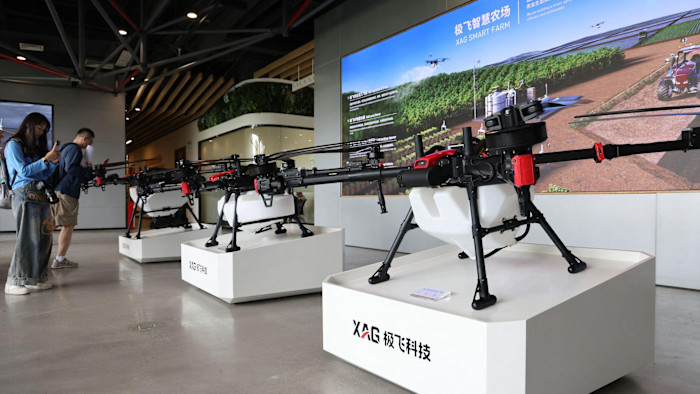
It also announced strengthened controls on exports to the US of drones, their key components and related technologies included on a dual-use control list. Exports would be subject to review on a “case-by-case basis”, the ministry said.
The announcements highlight continuing strains in relations between Beijing and Washington ahead of an expected visit by President Xi Jinping to the US in September. The trip follows Donald Trump’s state visit to Beijing in May, the first by a US president in nine years.
Washington last week added 43 Chinese companies to its list of those banned from importing to the US over alleged links to the use of forced labour in Xinjiang.
The US Federal Communications Commission has also restricted imports of Chinese tech over alleged security risks, including banning new models of some drones and routers. In June, the FCC expanded to newer models an earlier ban on telecommunications equipment from companies such as Huawei and Hikvision.
Beijing’s commerce ministry on Wednesday referred to recent “negative measures” by the FCC when it imposed sanctions on US company Compliance Testing for “assisting” the regulator, an action it said endangered China’s “sovereignty, security and development interests”.
Previous Chinese retaliation against US companies has included action against PVH, the owner of Calvin Klein and Tommy Hilfiger, which Beijing put on an “unreliable entity list” early last year as the US began to increase tariffs on China.
Trump and Xi struck a fragile trade truce at a meeting in South Korea in October, with relations further stabilised by the US president’s trip to China in May. But the two leaders’ discussions yielded no clear breakthroughs on the economic fissures between their countries.
China already has extensive restrictions on drone exports, many of them imposed in 2023 after Russia’s full-scale invasion of Ukraine a year earlier.
China has a dominant role in the supply chain for drones globally and companies such as DJI, Autel Robotics and XAG have large US sales despite being subject to increasingly complex regulations there.
On Wednesday, shares in Zhongji Innolight and Eoptolink, two Chinese manufacturers that have soared on the global AI boom, fell sharply following a report that the US could ban their equipment from its data centre.
Xi last month set out ambitions to rival the US as a global AI leader, offering training to developing countries.
Additional reporting by William Langley in Guangzhou