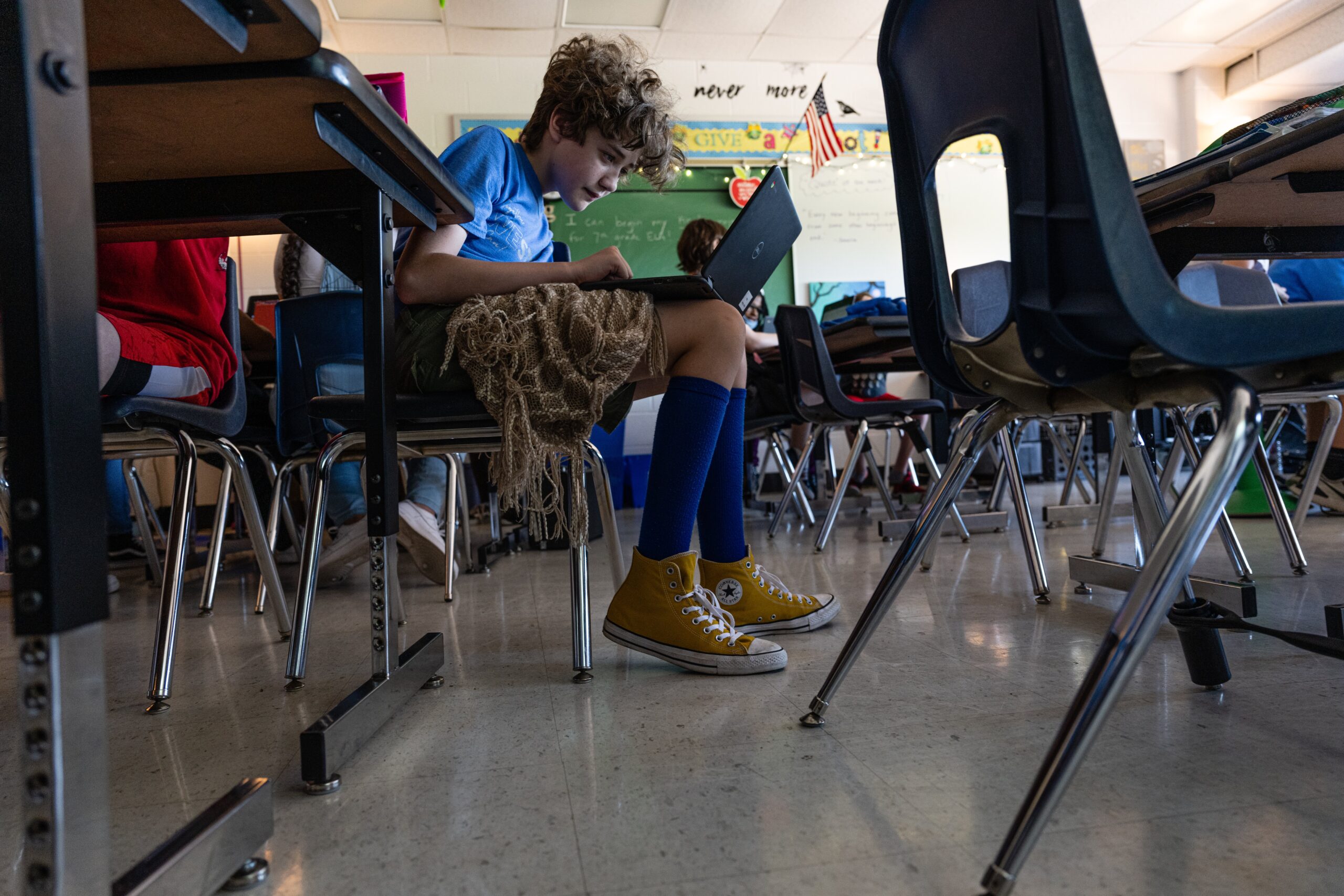
There’s one item on many teens’ back-to-school supply lists you won’t find in stores — and at some schools, not even in the classroom.
Seven in ten teens use artificial intelligence tools for schoolwork, according to a new survey from Common Sense Media.
TODAY correspondent Emile Ikeda sat down with families to learn how this quickly evolving technology is making its way into classrooms, and whether schools encourage it.
The survey measured the different ways AI comes up in academic spaces. More than 77% of surveyed teens who use AI say they use it for help without getting direct answers, while 63% say they get an answer to their schoolwork from AI.
Amanda Hyslop, a nurse and writer in San Francisco, was shocked to find her son taking a picture of his math homework to solve a problem.
“I don’t really know anyone that doesn’t use it,” Hyslop’s son William Driegert said.
After having more conversations about AI, Hyslop was inspired to help write the AI policy for her son’s school district. In the course of those discussions with his mom, Driegert, now going into ninth grade, has changed his stance on AI in the classroom.
He says he initially would use the technology to find the answer for a math problem. Now he uses it as a tool to teach him how to understand a concept or create a practice test.
“I started using it to help me, solve and understand, so I could do better on like, my math test,” Driegert said.
While parents can control what conversations are had at home, most parents don’t get to influence curriculum planning.
73% of teens are missing out on key AI literacy conversations with their teachers, according to the survey.
“I wanna make sure that they use their own brain,” Hyslop told TODAY, adding, “And if you have a big question to ask that it’s very important to talk to an adult about it.”
Jim Steyer, CEO and founder of Common Sense Media, spoke on the timeliness of these conversations.
“I think this is the year when we’re realizing that AI is in every classroom,” Steyer told Ikeda. “AI should not replace learning. AI should not replace thinking.”
While the majority of teens surveyed reported using AI overall, 65% of teens first try to solve problems themselves or ask for help before turning to AI for answers.
“The biggest takeaway for parents is that you have to be involved with your kids’ schoolwork and understand that AI is now part of their life,” Steyer said. “Period. Full stop.”
This story first appeared on TODAY.com. More from TODAY: