Renewed fighting between the U.S. and Iran entered its sixth day Thursday, with both nations’ militaries ramping up their attacks on sensitive facilities.
Iranian state-affiliated media reported strikes on Qeshm, an Iranian island in the Strait of Hormuz. Casualties or damage to the island’s facilities were unknown.
Meanwhile, Bandar Abbas, a port city on Iran’s southern coast, came under attack from U.S. missiles, according to Iranian news agency Fars, which is affiliated with the Islamic Revolutionary Guard Corps. Authorities reported no casualties or structural damage.
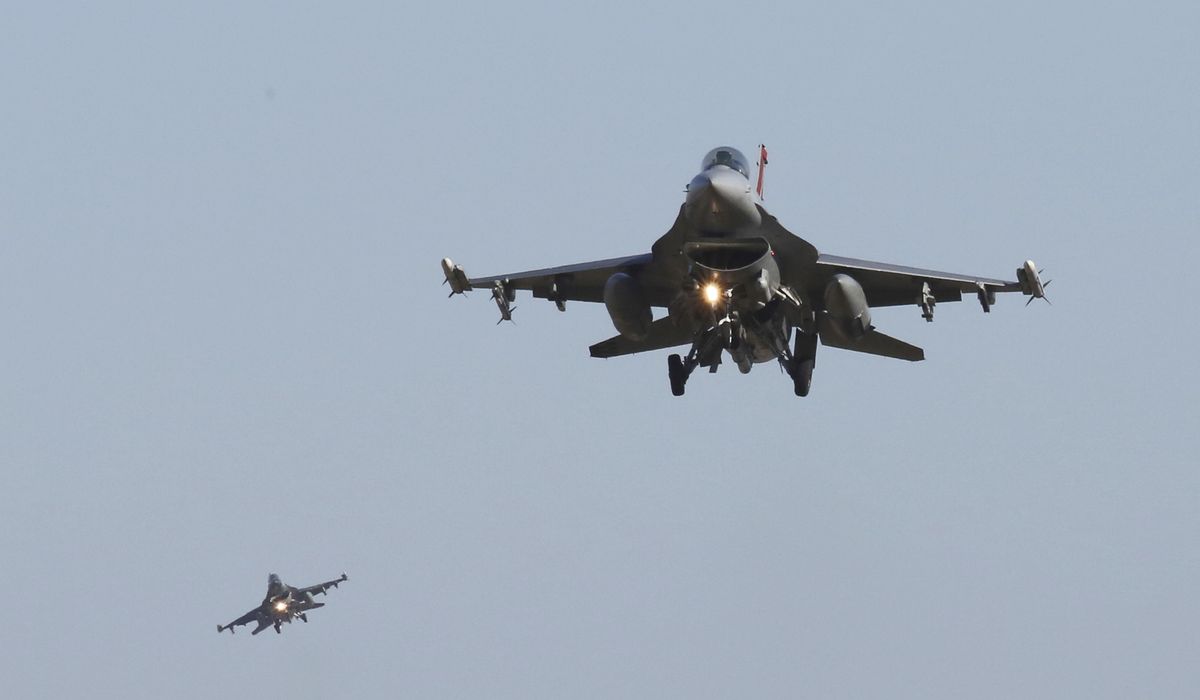
U.S. Central Command said the strikes were conducted to “further degrade Iranian military capabilities.”
CENTCOM’s round of bombing on Iran overnight targeted command-and-control centers, air defenses and domestic security facilities.
The command said the latest attacks, like other U.S. strikes over the past week, were intended to weaken Iran’s ability to interfere with commercial shipping in the Strait of Hormuz.
The overnight strikes also reached further into Iran than recent attacks, hitting targets close to Tehran as well as the cities of Pakdasht and Parchin in Tehran Province. CENTCOM’s strikes also reportedly hit cruise missile sites on Greater Tunb Island.
“U.S. forces struck Iranian command centers, air defense sites, missile and drone capabilities, and coastal surveillance facilities to further degrade Iran’s ability to threaten innocent mariners crewing commercial vessels transiting the Strait of Hormuz,” CENTCOM said.
Advertisement
Iran responded by launching further strikes on U.S. military assets in Kuwait and Jordan. Authorities in both countries reported no casualties or significant damage caused by missile or drone debris.
Iran has repeatedly launched attacks at Persian Gulf nations since fighting restarted last week. Iranian authorities have insisted that the bombing is aimed only at U.S. military installations in the region, but the strikes have also hit energy sites, diplomatic buildings and commercial infrastructure.
The Iranian Foreign Ministry again warned Gulf countries that any nation that assists the U.S. in launching attacks on Iranian territory would be considered a legitimate target.
The recent flare-up in hostilities between the U.S. and Iran stems from a dispute over control of Hormuz, the critical waterway through which 20% of the world’s oil is transported.
Under the terms of the Islamabad Memorandum of Understanding, signed by the U.S. and Iran last month, Iran must allow for the free flow of commercial ships through the strait for at least 60 days while negotiators hammer out a final peace deal.
Advertisement
During that time, Iran was also supposed to enter into negotiations with Oman, which also borders the waterway, to determine the future governance of Hormuz.
However, Iranian officials insisted that the memorandum gives Iran total control over the flow of traffic in the strait and declared that commercial ships needed to travel only through preapproved routes while working with Iranian authorities.
Iran struck several vessels trying to traverse the strait through an alternative route in Omani-controlled waters, sparking condemnations from the U.S. and international organizations.
Shortly after the first three vessels were attacked in the strait, CENTCOM bombed targets on Iran’s southern coast, leading to a seemingly endless stream of attacks and retaliations.
Advertisement
The U.S. has also reimposed a naval blockade of Iran’s coastal ports to further squeeze the country. CENTCOM said Wednesday that it had disabled a Curacao-flagged oil tanker trying to sail toward Iran’s Kharg Island, a crucial energy port for Iran.
Still, there were signs of a diplomatic opening amid the fighting.
The White House insisted that Iran and the U.S. were still communicating about a possible peace deal.
“Iran very much continues to talk to the United States of America and has expressed that they want to make a deal with us because they are suffering devastating blows,” White House press secretary Karoline Leavitt told reporters during her briefing.
Advertisement
President Trump said Wednesday that Dena Karari, an Iranian American trapped in Iran since December 2024, was on her way back to the U.S.
Iran seized the passport of Ms. Karari, a 53-year-old California resident, while she was visiting family in Shiraz.
“She is now safely outside of Iran, and in good condition,” Mr. Trump said on social media. “The United States of America appreciates this gesture of Goodwill by Iran!”
The U.S. and Iran held one round of high-level talks in Switzerland in June, the first major direct meeting after the signing of the memorandum of understanding, but the two sides have met only once since then, an indirect meeting in Qatar that did not result in a major breakthrough.
Advertisement
Mr. Trump said Iran will be forced to make a peace deal that constrains its nuclear program because it will be overwhelmed by U.S. power.
Iran’s lead negotiator and parliamentary speaker, Mohammad Bagher Ghalibaf, hinted Wednesday that negotiations were still possible. He said Iran could use the “tools of diplomacy and negotiations” to achieve its goals.
“We must create coordination between the military and diplomatic tracks, and we must fear neither war nor negotiations. War and negotiations are two methods of protecting the national interest,” he said in a televised address.
Democrats in Congress are urging Mr. Trump to end the conflict, saying it is taking an economic toll on Americans through higher gas prices.
The average U.S. price of gas was $3.94 per gallon Thursday, up 5 cents from Wednesday and a 32% increase from Feb. 28, when the war began, according to the AAA Daily Fuel Gauge Report.
Story Topics