Los Angeles animal shelters recorded a sharp increase in euthanizations of cats and kittens through the first six months of the year, which officials attribute in part to a rise in animals brought to the shelters.
Nearly 900 kittens were euthanized from January through June, up from about 600 the first six months of last year, for a 43% increase.
Euthanasia of cats — those more than 8 weeks old — saw a 32% increase compared with the same time last year with 1,142 killed through June. Euthanasia of dogs, by comparison, increased by 2%.
Gabrielle Amster, general manager of L.A. Animal Services, said much of the increase was fueled by an influx of kittens into the system.
Kitten intake rose 30% in April compared with the same month last year, according to the department’s Woof Stats, and euthanasia increased by 177% in April compared with the same month a year earlier.
“When that many vulnerable animals arrive before our foster network has fully mobilized, the gap between what a shelter can provide and what neonatal kittens need to survive becomes devastating,” Amster said.
Through June, 5,215 kittens passed through Animal Services’ doors, compared with 4,823 in the same period last year.
Animal activists like Christi Metropole of Stray Cat Alliance say city funding for spay and neuter vouchers hasn’t kept up with demand from people who want their pets sterilized, as well as from those who trap feral cats to keep stray populations low.
The value of free spay and neuter vouchers for pets increased last year from $70 to $120 for cats but the budget allocated for them did not, so fewer vouchers were issued overall.
The new city budget, which took effect July 1, includes a $1-million increase in the spay and neuter budget, bringing the total to $6.5 million for animal sterilizations.
Metropole and Lisa Lange, an L.A.-based senior vice president for People for the Ethical Treatment of Animals, say the best way to control the cat population and keep more kittens from entering the shelter is to prevent cats from having kittens in the first place.
“There is an answer to this crisis, and it’s to prevent births,” Lange said.

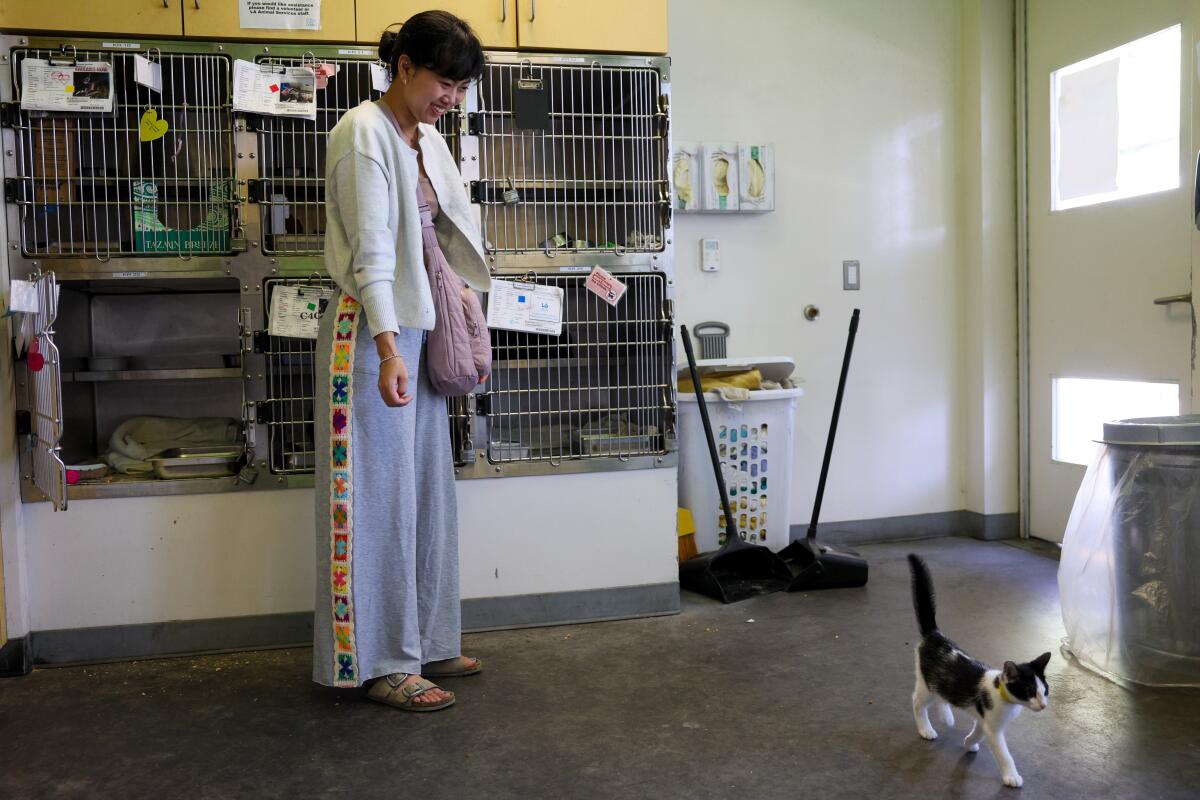
Torrance resident Katherine Han smiles while watching Baby walk around a cat viewing area at Chesterfield Square / South LA Animal Shelter.
(Ronaldo Bolaños / Los Angeles Times)
Female cats begin breeding when the weather starts to get warmer, according to Michelson Found Animals, an animal welfare nonprofit funded by surgeon and philanthropist Dr. Gary K. Michelson. California has kitten season twice per year on average because of the moderate temperatures, often overwhelming shelter systems and fosters between March and October.
Euthanasia data showed that 2025 was a year of improvement for the shelter system’s kill rate, but so far this year numbers have returned to 2024 levels.

Amanda Newkirk, director of communications at the UC Davis Koret Shelter Medicine Program, linked this year’s increase to several factors, including vet care that is more expensive and more difficult to find — both for pet owners and animal shelters.
“Fewer available surgeries mean more unsterilized cats, more kittens born outdoors and more animals entering shelters during a season when space, foster homes, staffing and veterinary capacity are already stretched,” Newkirk said.
Newkirk noted that many landlords won’t allow their tenants to keep pets, reducing the number of potential homes for shelter animals. Assemblyman Matt Haney (D-San Francisco) introduced legislation in 2024 to make it harder for landlords to keep pets out of their units, but the measure died in committee.

Kittens at the Chesterfield Square / South LA Animal Shelter.
(Ronaldo Bolaños / Los Angeles Times)
Jen Naitaki, senior advisor for the Michelson Center for Public Policy, another nonprofit founded by Michelson focused on policy change in California and Los Angeles, said the city’s free and low-cost spay and neuter vouchers run out quickly every month. Most kittens and cats brought to the shelter are strays, or so-called community cats without clear owners.
The city’s vouchers for the Community Cat Program have stagnated compared with vouchers for individuals with pets, Naitaki said, leading to explosive kitten seasons like this year.

The shelter system will see a boost in funding for 23 positions via a $14-million grant from ASPCA and Best Friends Animal Society. Some activists remain positive that more staffers at shelters will improve conditions, but others argue the money should go straight to the animals through food, enrichment and supplies instead of wages.