California minted a whole slew of new millionaires Thursday (not to mention several billionaires) when San Francisco-based Anthropic made its stock market debut.
It’s estimated that nearly 600 employees of the artificial intelligence giant made more than $100 million with their stock options, while thousands more topped $1 million.
Great news for them. For the rest of us, the stock offering marks an era of unprecedented risk. It comes amid fears that AI is a bubble that could burst, which would pose a threat to the safety of pension and retirement funds. It also further empowers a company and an industry that quite openly admits it may destroy humanity.
Avoiding those risks, Anthropic founder Dario Amodei said as the opening bell rang on Wall Street, “depends on the choices made by the people building AI.”
So far, those choices have been questionable.
Gov. Gavin Newsom, not-so-subtly testing the presidential waters in Washington, D.C., this week, released a report on how California could strengthen oversight of AI companies.
Because, as Amodei put it, “There is a gigantic difference between how AI will go if we pay little attention to safety versus how it will go if we are obsessed with safety.”
So let’s take a look at what’s happening.
The trillionaire class
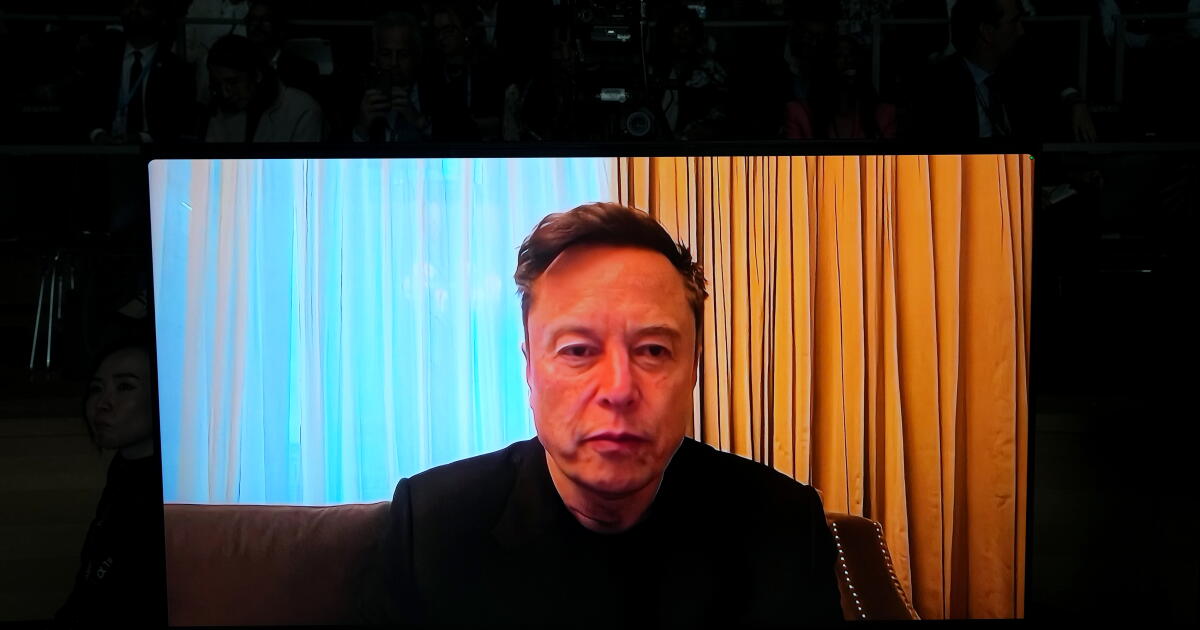
Let’s start with Elon Musk.
Musk, you may recall, was a huge fan of President Trump and his MAGA movement, including making white nationalist-sounding claims about immigrants. He wore the hats. He waved a red chainsaw and called Democrats “traitors.” At a 2024 rally, he claimed he wasn’t “just MAGA,” he was “dark, gothic MAGA.”
Then came the 2026 midterms and you can guess the rest. This week, Musk told the New York Times he’s “not MAGA” and doesn’t know what that even means.
Apparently, he’ll say whatever curries favor with power.
So much so that he now claims he feels “foolish” for bankrolling Republicans with almost $500 million in the midterms — to which Trump responded by pointing out Musk was MAGA enough to travel with him during the 2024 election.
“MAGA, to me, means something very specific, and when people veer from it, they don’t do very well,” Trump said.
The lesson here is that we shouldn’t trust that the owners of these AI companies have any loyalties, except ones that benefit themselves.
‘Zero-day vulnerabilities’
Meanwhile, in recent days, the airlines were grounded, banks were hacked, Microsoft stopped delivering emails. The National Security Agency’s internal communications system collapsed. All of these incidents, we have been assured, are unrelated and have absolutely, positively nothing to do with anything that should concern any of us about our safety.
That is the party line from Trump administration officials, some of whom have seen their net worth skyrocket in the last two years, partly through AI investments.
But it goes straight back to AI. The AI companies themselves have endlessly bragged about how their models can easily find “zero-day vulnerabilities.” These are basically flaws in existing systems that let hackers in and must be fixed instantly.
It used to be that it took really good hackers a long time to find one. Now, thanks to AI, it takes about 15 minutes and $4. Sometimes, the AI just finds the back door on its own.
AI companies want you to know that they are working really hard to prevent this — often by selling services to find and patch zero-day flaws before hackers do, thereby profiting from the problem they created.
But as “technical glitches” and “routine updates” cause massive disruptions, one has to wonder if AI companies will save us from AI companies quickly enough — because as much as AI might kill off humanity, it could also just take down our critical infrastructure on purpose or by accident.
And here’s the part that concerns me the most: recursive self-improvement. That’s just AI models making new, even more powerful AI models with no human interference.
They use their own knowledge and judgment to keep churning out new versions of themselves. Rogue AI models that have already shown they don’t follow rules could potentially create more powerful models that arguably would have even less interest in following rules.
We are on the edge of that happening, and the billionaires making it happen admit that when it does, they might not even realize it until after the fact — and therefore wouldn’t be able to stop it.
In a lawsuit recently filed by California Atty. Gen. Rob Bonta against OpenAI, he points out that at least 80 times, “OpenAI lost control of its own models in testing and development.”
The lawsuit alleges that the company knew it was “threatening the safety, health, and well-being of society” and went ahead testing “a dangerous product without proper oversight or safety procedures and misled the public about it.”
With usual tech-lord gusto, OpenAI founder and billionaire Sam Altman told the New York Times this week that when it comes to safety, “We’re not going to be able to make everybody happy.”
California solution
Which brings us back to the California report, which offers four areas where the Legislature could and should act quickly. (While the incoming Democratic-controlled Congress has indicated it may take up the issue, it wouldn’t be until next year.)
Nathan Calvin, chief strategy officer at Encode, an AI safety organization that was instrumental in passing AI regulations in California in 2025, said the possibility of Newsom taking quick action makes him “quite hopeful” that something meaningful could be done in the next few months.
“AI progress is already accelerating due to automation, so we feel it’s essential the governor and Legislature act urgently to address urgent risks,” Calvin said.
Doing so, he said, will give California — and all of us — “breathing room to set up longer term solutions.”
Newsom’s report recommends having outside agencies monitor a new set of baseline safety standards with depth and accountability. This isn’t a new idea, and it could have some flaws, but is also a great place to start. Equally important, these baseline standards would force companies to report to the state where they’re at with recursive AI.
The report also recommends funding CalCompute, which would give the state its own AI capabilities independent of private companies. This is an idea that was in Senate Bill 53, a set of weaker AI safety standards passed last year, but it was never funded. Now, the safety experts who compiled the report are recommending we build it out so that the state is not dependent on billionaire whims.
California could also consider faster reporting of uh-oh incidents, including when AI models escape into the wild. And AI companies could, as the report suggests, be forced to confirm through testing that they can actually shut the models off in an emergency, and give the state the power to order an emergency shutdown.
But a report isn’t going to save us, and the industry will surely fight publicly and behind the scenes to tank many of these reforms — as it did when it successfully watered down SB 53.
That included pressure on Newsom himself to refuse to back it until the industry consented to it. Now, Newsom needs to use his last days in office to turn it into legislation. Otherwise, all those fixes are just like billionaire talk — sounds good, means nothing.
What else you should be reading:
The must-read: Sex, drugs and spin classes? The Sunset Strip is confronting a new era
The California angle: Newsom arrives in D.C. with an AI plan, as Trump aides struggle to address outages
The L.A. Times Special: ‘Making history’: Trump, Putin and Xi meet in unprecedented China summit
Stay Golden,
Anita Chabria
—
Was this newsletter forwarded to you? Sign up here to get it in your inbox.