District residents paid homage to U.S. Sen. Blanche Bruce, the first African American to serve a full term in the U.S. Senate for Mississippi, following U.S. Sen.-elect Scott Colom’s win on Wednesday.
Colom will become the first Black senator from Mississippi since reconstruction.
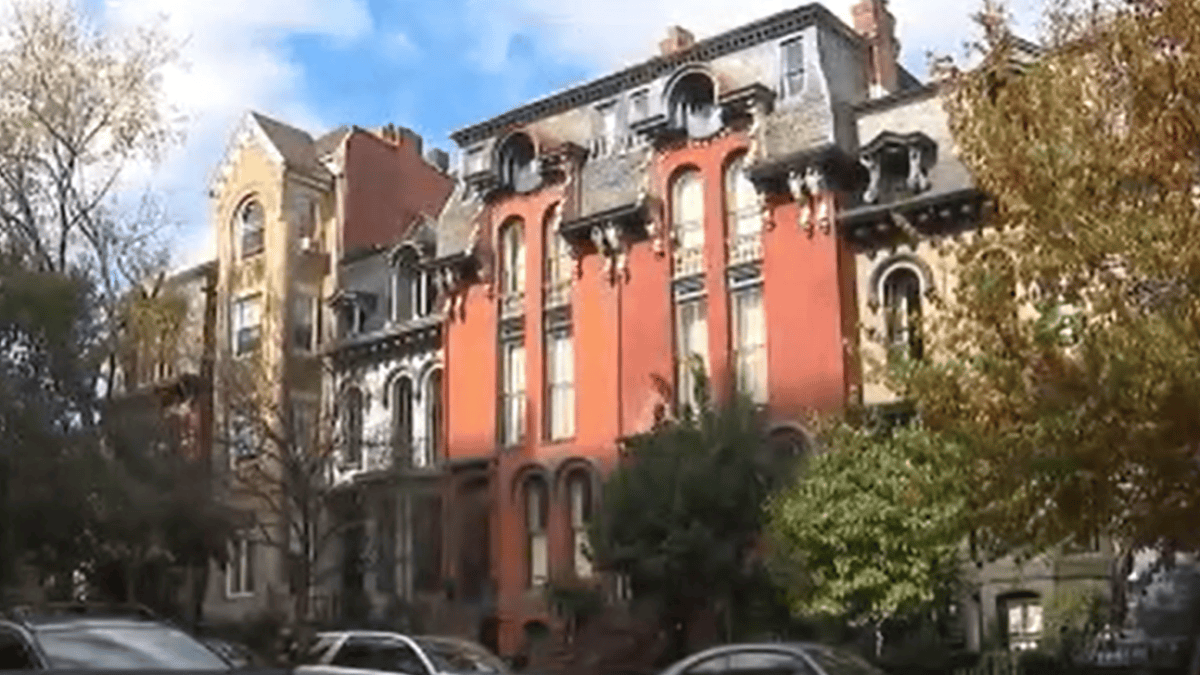
Neighbors left flowers on Sen. Bruce’s home, which sits along M St. in Northwest D.C., as a way to celebrate the city’s rich African American history and celebrate Colom’s victory.
“The people of Mississippi needed a moment to get credit for how far they’ve come, I think a lot of people think of Mississippi as backwards,” said Eric Garcia, a Northwest D.C. resident.
“A light went off in my head, and I texted my roommate, ‘wait we live next right by Blanche K. Bruce’s house’ and he’s like ‘yeah, it’s one of the most beautiful row houses,’ and as you can see it’s a gorgeous home,” Garcia said.
Garcia then picked up a bouquet of flowers from a nearby grocery store and dropped it off at the former senator’s house.
Like Garcia, Jelani Murrain left flowers at the historic landmark, a place he considers his home away from home.
“I was born and raised in Jackson, Mississippi,” Murrain said. “I knew about Sen. Bruce my whole life, and so for the last 26 years, this is one of the first places I came, because it meant a lot to my family.”
Sen. Bruce was elected to the Senate by the Mississippi Legislature, whereas Sen.-elect Colom was elected by Mississippi voters.
“Since then, there has not been a Black person to serve in the Senate from the state of Mississippi,” said Dr. Karsonya Wise Whitehead, an African and African American studies professor at Loyola University.
“Scott Colom has broken through, you can call it a glass ceiling, you can call a brick wall, you can call it a watershed moment, you can call it whatever you want…I say it is history that is long overdue,” the professor said.
“Think about voting rights, you think about that encompasses everything, and so it just shows you that history can actually come to life,” Murrain said.
“People like myself who are transplants, we kind of owe it to ourselves to learn about the rich history of this amazing city that we live in and absorb as much as we can,” Garcia said. “It’s not just a place where we work and where national politics is, it’s a place that for a long time was a place where Back people could be themselves and could prosper and thrive.”