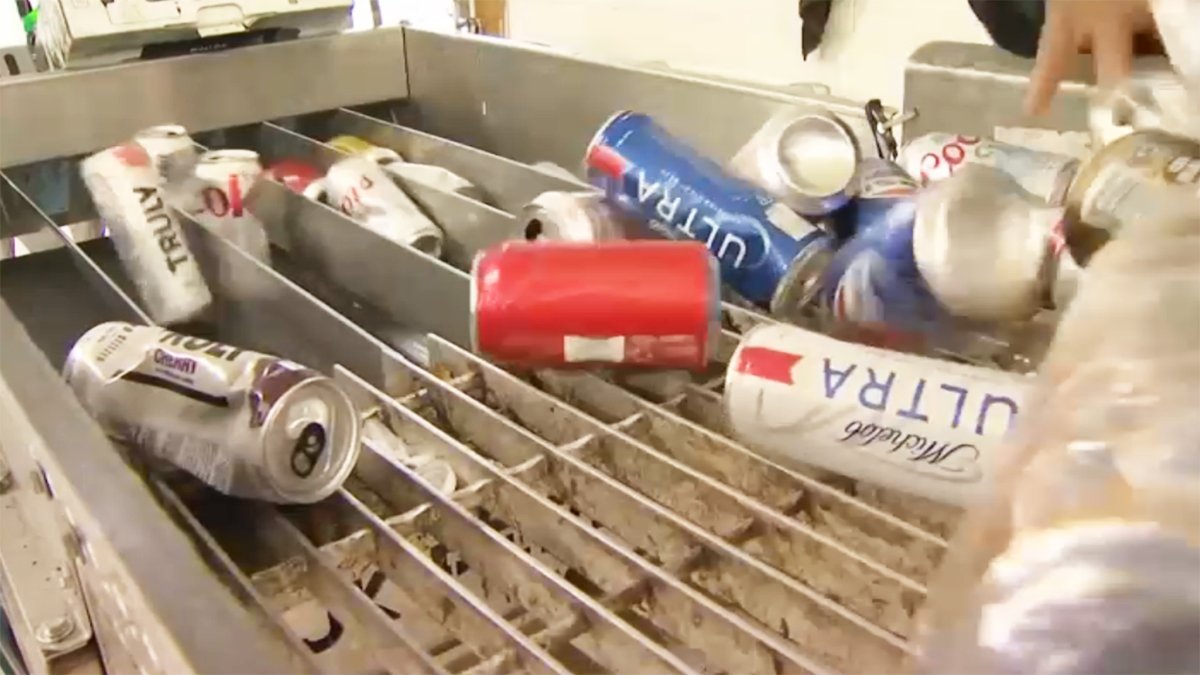
A bottle of water or a can of soda could cost you an extra 10 cents in the District if a new proposal being considered by the D.C. Council is approved. But you would be able to get those 10 cents back by returning the empty container for recycling.
A roundtable discussion was held Thursday on the what’s become known as the D.C. “Bottle Bill.” Supporters and opponents spoke about pros and cons.
The bill aims to make D.C. cleaner by keeping more bottles and cans out of D.C. streets and rivers. While many agree with the goal, opponents argue it would create new costs for businesses and consumers at a time when many are already feeling the strain.
“Local businesses are struggling mightily. Local restaurants, local shops are all seeing revenues decrease,” said Brendan Williams-Kief of the D.C. Association of Beverage Alcohol Wholesalers. “And at this point, we simply can’t afford to create a duplicative recycling program.”
Councilmember Brianne Nadeau, the lead sponsor of the bill, said her bill puts the onus of addressing the problem on big beverage companies and distributors. The program would be managed by a nonprofit funded and operated by beverage distributors and would be overseen and enforced by the Department of Energy and the Environment.
“We spend tens of millions of dollars a year cleaning up litter, and that’s just what we can quantify,” Nadeau said. “Without a bottle bill, plastic containers are everywhere, and we have to make that trash valuable so that people redeem it.”
While the bill has exemptions for small businesses, some who spoke during the roundtable said they’re still concerned about the possibility of having to incur more costs.
“’Another regulatory or permitting cost – you know, they’re using a lot of different terms for fees and things like that,” Thor Cheston, co-owner of Right Proper Brewing Company, told News4. “Like I said, the language of the bill is just too vague for us to get comfortable with it.”
Issues over fraud, like people from other states bringing in bottles just to get the deposits, also were brought up. The bill could be up for a vote in the fall. If approved, it would not go into effect until 2028.
Supporters point to the success of D.C.’s plastic bag fee and said they hope the bottle bill could have a similarly transformative affect on reducing litter.
Christopher Williams, president of Anacostia Watershed Society, said in testimony that the bill could bring real improvements to the city’s littering problem and safety.
“By far the most common item we find in our cleanups and trash traps is the single-use beverage container, particularly plastic bottles. These bottles and cans pollute shorelines, foul wildlife habitat and in the case of plastic bottles, present an emerging threat to human health in the form microplastics as those bottles break down,” he said.