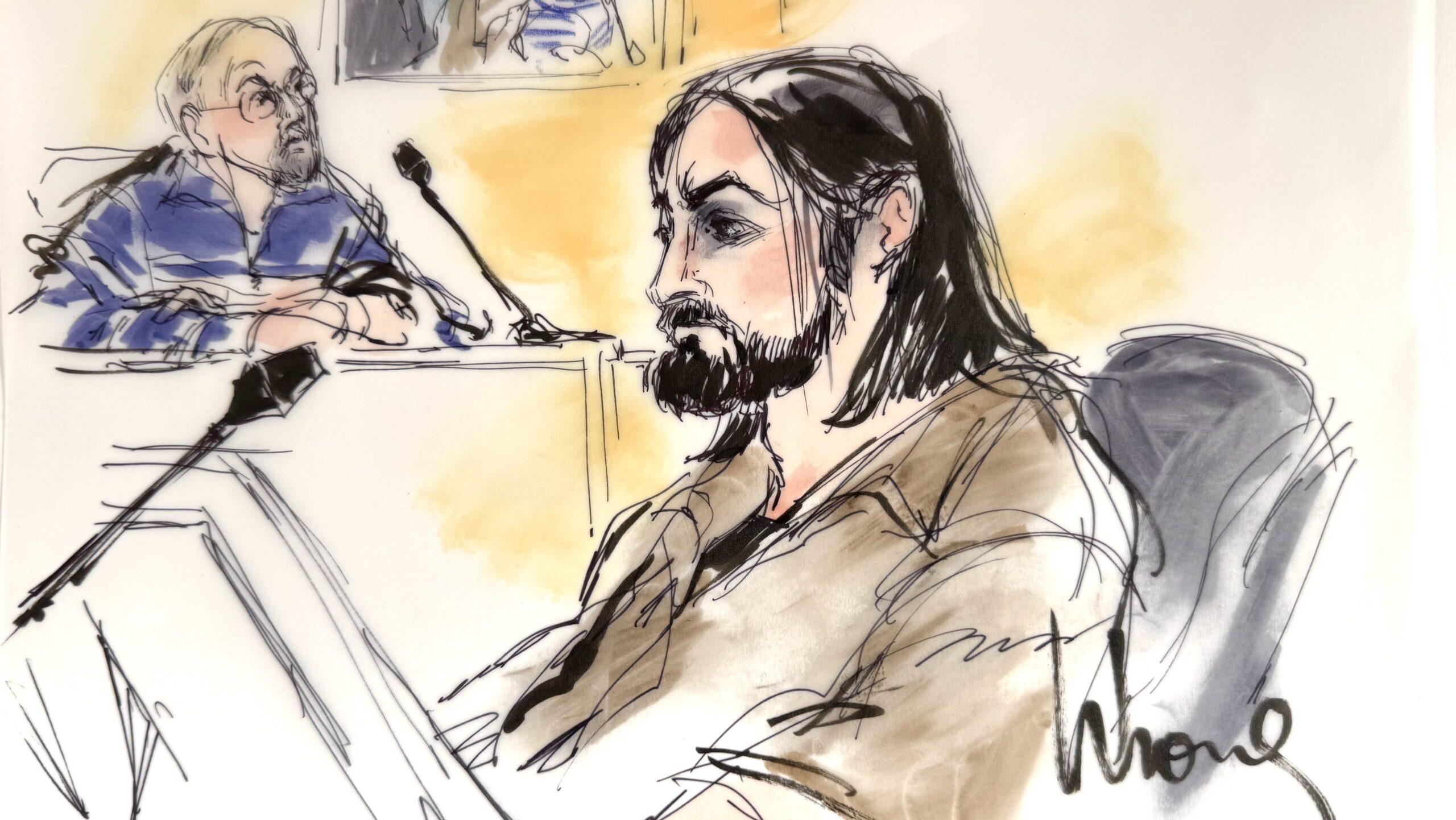
A former Pacific Palisades resident was found guilty Friday of federal arson charges after prosecutors made a second attempt to convict him in connection with the 2025 Palisades Fire.
A Los Angeles jury found Jonathan Rinderknecht guilty of two charges: destruction by fire and destruction of property. Prosecutors alleged that Rinderknecht started a small fire, the Lachman Fire, that ultimately led to the devastating Palisades Fire.
Jurors reached the verdict at around 2:45 p.m. after deliberating for nearly three days following closing arguments Tuesday, nearly five months after the first trial ended with a hung jury.
Sentencing is expected to take place on March 17, 2027.
Prosecutors alleged that Rinderknecht deliberately started the Lachman Fire, a small brush fire that broke out in the early morning hours of Jan. 1, 2025. They said embers continued smoldering underground for six days before reigniting amid gusty Santa Ana winds and sparking the devastating Palisades Fire.
To retry Rinderknecht, federal prosecutors revised the indictment and charged him with two federal arson-related crimes: setting fire to government property and setting fire to property used in interstate commerce.
When the retrial began Nov. 4, prosecutors zeroed in on digital and forensic evidence, including cellphone location data that they said placed him near the site of the Lachman Fire. Assistant U.S. Attorney Mark Williams said fire-alert cameras showed the Lachman Fire igniting, with no other cars or pedestrians approaching the area before flames appeared.
The U.S. Attorney’s Office again used Rinderknecht’s ChatGPT search records during the retrial, alleging that the now-31-year-old had searched for information about whether he could have accidentally started a fire with his cigarette.
Williams also argued that Rinderknecht’s previous ChatGPT-generated fire imagery offered insight into his state of mind and interest in wildfires.
During closing arguments, federal prosecutors reminded jurors that Rinderknecht had allegedly lied about his whereabouts when questioned by investigators and had a barbecue lighter in his car that could have been used to start the fire.
“Piece it together. Look at it as a whole,” Assistant U.S. Attorney Danbee Kim urged jurors, asking them to evaluate all the evidence together rather than separately. She argued that Rinderknecht’s anger, fascination with fire, return to the scene, videos of firefighters and alleged lies to investigators reinforced the forensic and digital evidence.
The verdict marks a victory for the U.S. Attorney’s Office for the Central District of California, which failed to secure a conviction in June after jurors deadlocked, resulting in a mistrial. The jury in Rinderknecht’s first trial deadlocked 10-2 in favor of an acquittal. Prosecutors had immediately announced he would be retried.
The defense argued that prosecutors had predetermined Rinderknecht was guilty and then tried to make the evidence fit their theory without proving his guilt beyond a reasonable doubt.
Defense attorney Steve Haney pointed out that the prosecution’s case was based largely on circumstantial evidence, as no one saw the Lachman Fire start and no camera captured its ignition. He also argued there was no physical evidence showing Rinderknecht using a lighter to ignite vegetation.
The defense also challenged the allegation that the fire was started with a lighter, citing 67 lighter tests. Haney argued the tests failed to demonstrate sustained fire spread.
There was also testimony that fireworks, explosions and flashes were reported during New Year’s Eve celebrations before the Lachman Fire broke out. Defense attorneys have claimed that the Lachman Fire could have been started by New Year’s Eve fireworks.
Haney has said there was insufficient evidence to prove the Lachman Fire was intentionally set and far from conclusive proof that embers reignited in the intense winds a week later.
Haney also told jurors that investigators failed to obtain Verizon records that could have shown whether anyone else was near the Lachman Fire site besides Rinderknecht.
Now with the guilty verdict, Rinderknecht faces a statutory maximum of up to 40 years in federal prison.
This story originally appeared on NBCLosAngeles.com.