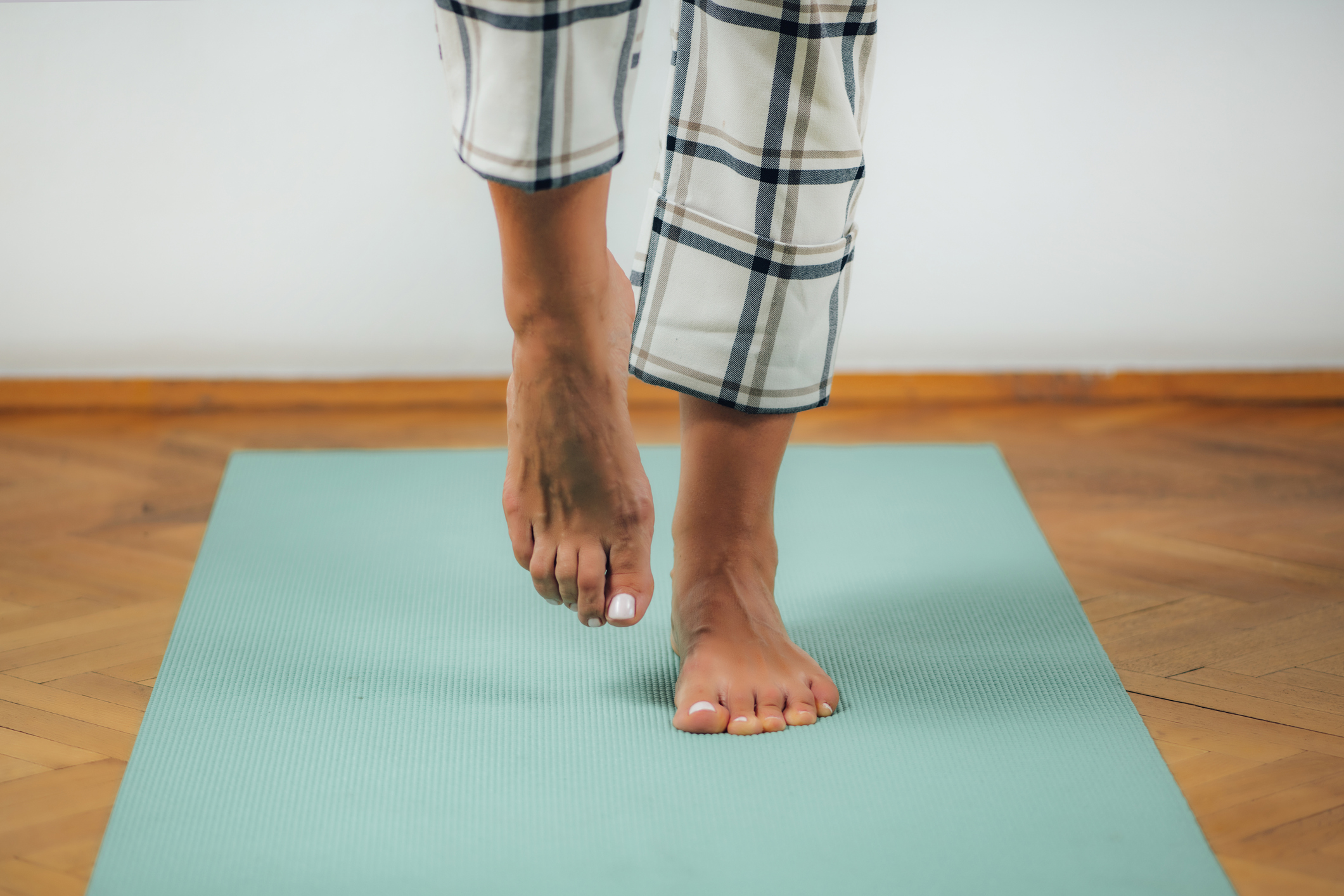
Research shows that your grip strength, bone density and genetics can all play a role in your quality of life as you age — but how long can you stand on one leg?
As we get older, we’re more likely to have difficulty balancing, according to the National Institute on Aging. But maintaining balance and reducing the likelihood of falls is key to staying independent and active, as well as completing daily tasks.
A short test that calls on you to stand on one leg for 10 seconds can help estimate not only lifespan but how mobile you’ll be over the years. And if you can’t pass it right now, don’t worry — there are ways to improve your balance and, eventually, reap the anti-aging benefits.
Fitness tip of the day: Monitor your balance for healthy aging
Here’s how to perform the 10-second balance test, according to TODAY health editor and certified personal trainer Brianna Steinhilber.
- Remove your shoes or switch to a pair of flat shoes.
- Stand with your feet hip-width apart.
- Lift one foot off the ground. Don’t let it touch your standing leg.
- Hold for 10 seconds.
- Repeat on the other side.
Some wobbling is normal, so if needed, keep your eye on something stable and hold your arms out to your sides, Steinhilber said.
Why it matters
How good you are at balancing is “a reflection of how well multiple systems in your body are working together, things like muscle strength, neuromuscular control, vision, proprioception and even brain health,” Steinhilber explained.
In fact, a 2022 study of 1,700 people between 51 and 75 years old found that those who couldn’t stand on one leg for 10 seconds had an 84% higher risk of death over the next 10 years compared to those who could.
“It may sound scary, but there’s good news,” Steinhilber added. “Balance is something that we can train and improve over time.”
How to get started
If you’re unable to complete the 10-second balance test initially, Steinhibler offered these tips:
- Start with just a few seconds per leg and build up to 10 seconds.
- For extra stability, lightly rest the big toe of your lifted leg on the ground or on the ankle of the standing leg.
- Hold onto something, like a wall or table, for stability and try to rely on it less over time.
Once you’ve mastered the test, you can increase the difficulty by holding the pose for longer than 10 seconds, or closing your eyes or crossing your arms over your chest.
No matter your fitness level, staying consistent will improve your balance, Steinhilber says.
This story first appeared on TODAY.com. More from TODAY: