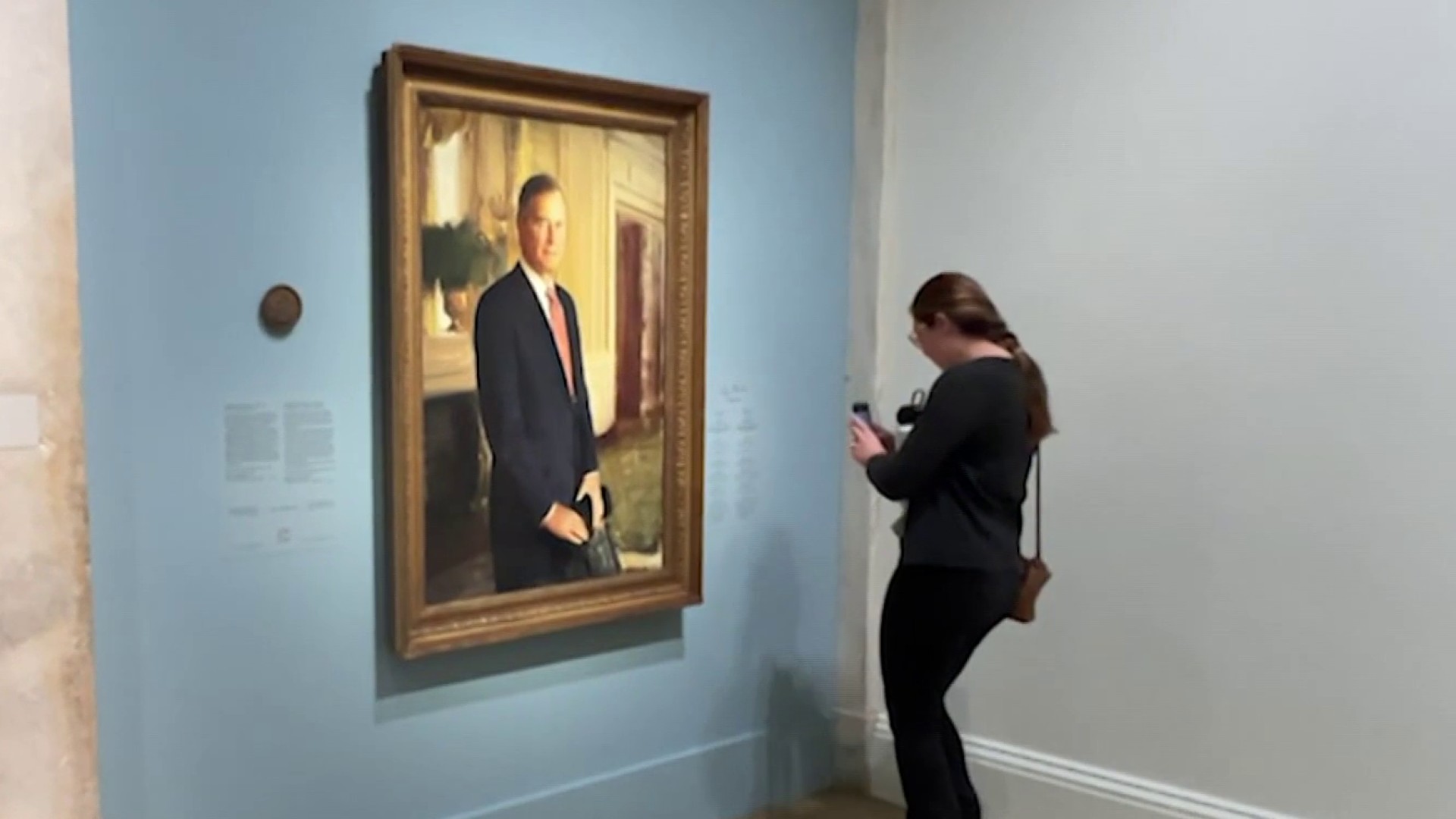
As America celebrates its 250th year of independence, many of us are reflecting on our history, visiting national parks and museums. But for thousands of visitors, they’re also on a mission.
News4 caught up with Rosie Click at the Smithsonian’s National Portrait Gallery, walking among the images of the American presidents she’s studied.
“Their text has been replaced with excerpts from a speech,” she noted.
The Georgetown University history grad student is finding her own place in history by documenting every picture, every sign and every caption on the walls.
“It’s important to document those things because we can’t always trust that they’re going to be there,” said Click.
She and hundreds of other citizens are voluntarily walking the halls of famous museums documenting exhibits as part of a project called Citizen Historians for the Smithsonian.
“For me, it began last summer when I saw a letter written from the White House to Secretary Lonnie Bunch of the Smithsonian Institution, and it was calling for the Smithsonian to basically provide a transcript of all of the texts that they have in the museum,” said Georgetown history professor Jim Millward, who helped start the group.
“As we knew from what DOGE had done, as we know from the purging of government websites, anything to do with gender, things to do race, things to do with climate were all potentially on the block to be censored by the administration,” he said.
Millward said what started as a message on a neighborhood listserv asking for a few volunteers to go to museums armed with their cellphones quickly spread to hundreds and then thousands of people raising their hands to help.
“We had too many volunteers for the actual jobs that we had to give them and people were complaining that they really wanted to do something,” said Millward.
Millward said his work was inspired by Save Our Signs, a citizen group that formed in opposition to President Donald Trump’s executive order entitled Restoring Truth and Sanity to American History. It called for a stripping of federal exhibits and educational programs of what the administration deemed “improper partisan ideology” to restore institutions to a “symbol of inspiration and American greatness.”
“We’d seen this in the Interior Department, in the national parks and national memorials, where a very similar kind of call had gone out. And there they put up QR codes in parks all around the country, asking people to snitch on anything that they saw as potentially DEI-related or not telling a positive story about America,” said Millward.
Through a public records request, News4 found how many Americans responded to those QR codes. One response cited an exhibit at the National Archives complaining it contained “guilt trips saying that slave labor was used to build the US Capitol and White House.”
But an overwhelming number of comments asked that the QR signs be removed and that the work of historians remain as-is, with one note that read: “Please keep all signage factual, honest, and based on the best efforts of your research historians, without regard to emotional or other considerations.”
“It’s been really amazing to see that people do care about their parks and that normal people are willing to go out there and do something in nature, but also stand up for a more complicated and nuanced history,” said Michael Corey with Save Our Signs.
He said the group has collected over 15,000 photos of exhibits in national parks. According to court documents from a lawsuit filed by conservation and historical organizations fighting the changes at national parks, hundreds of signs have been altered, removed or flagged for removal in the National Park system.
When News4 asked Corey what’s been changed, he responded: “You’ll see sometimes references to slavery at all being taken out. You’ll see references to the sexual violence that is very prevalent in slavery taken out. You’ll have people say, ‘Oh, well, this person was a slave owner but maybe it wasn’t so bad for the enslaved people who lived here’.”
“They removed the T from LGBTQ at Stonewall. They took down the pride flag at Stonewall. So, just things that really are at the core of why these sites exist in the first is being suddenly changed without any meaningful feedback or involvement of serious historians,” he added.
In June, a federal judge ruled that the Trump administration must reinstall signs it removed saying: “Not only does this undermine the integrity of the National Parks; it sets a dangerous precedent of censorship and sanitization.”
In a written statement to News4, a White House spokesperson said: “The Administration plans to appeal this heinous order and will not waver in defending America.” And added, “Instead of catering to the concerted efforts to rewrite American history and adopt left-wing ideology aimed at diminishing American achievement, President Trump is honoring our country’s extraordinary heritage and restoring a sense of national pride.”
“Americans have argued about their history from the beginning. And so as long as that debate, that argument, is based on scholarship; as long as that is done with dignity, that’s fine,” said Richard Kurin, Smithsonian distinguished scholar and ambassador-at-large.
“I was undersecretary of the Smithsonian for about a dozen years and probably involved in about two dozen controversies over things. So, we’ve had those moments, just as American institutions have always had those moments,” he said.
He said he supports the grassroots effort of everyday citizens keeping track of history.
“The Smithsonian belongs to the people of the country. And I’m so happy that people feel a stake in the Smithsonian. It’s their Smithsonian. It’s wonderful,” he said.
It’s a sentiment shared by volunteer Rosie Click.
“The Smithsonians are a real gift to all of us. I think here in D.C., in the D.C. area, as well as throughout the country and throughout the world, to be able to go into a world-class museum and see artwork and exhibits and specimens and documents that you might not be able to see anywhere else is really truly a gift and something worth protecting,” she said.
Millward said his group added the Kennedy Center and National Gallery of Art to the spaces they are documenting. They’re working to obtain grant money to pay staff and hire interns to maintain the data they’ve collected and find a way to make it available to the public.
American stories of same-sex relationships, gender non-conformity and love go back further in our history than you may think. News4’s Tommy McFly took a look back starting 250 years ago, during the American Revolution.